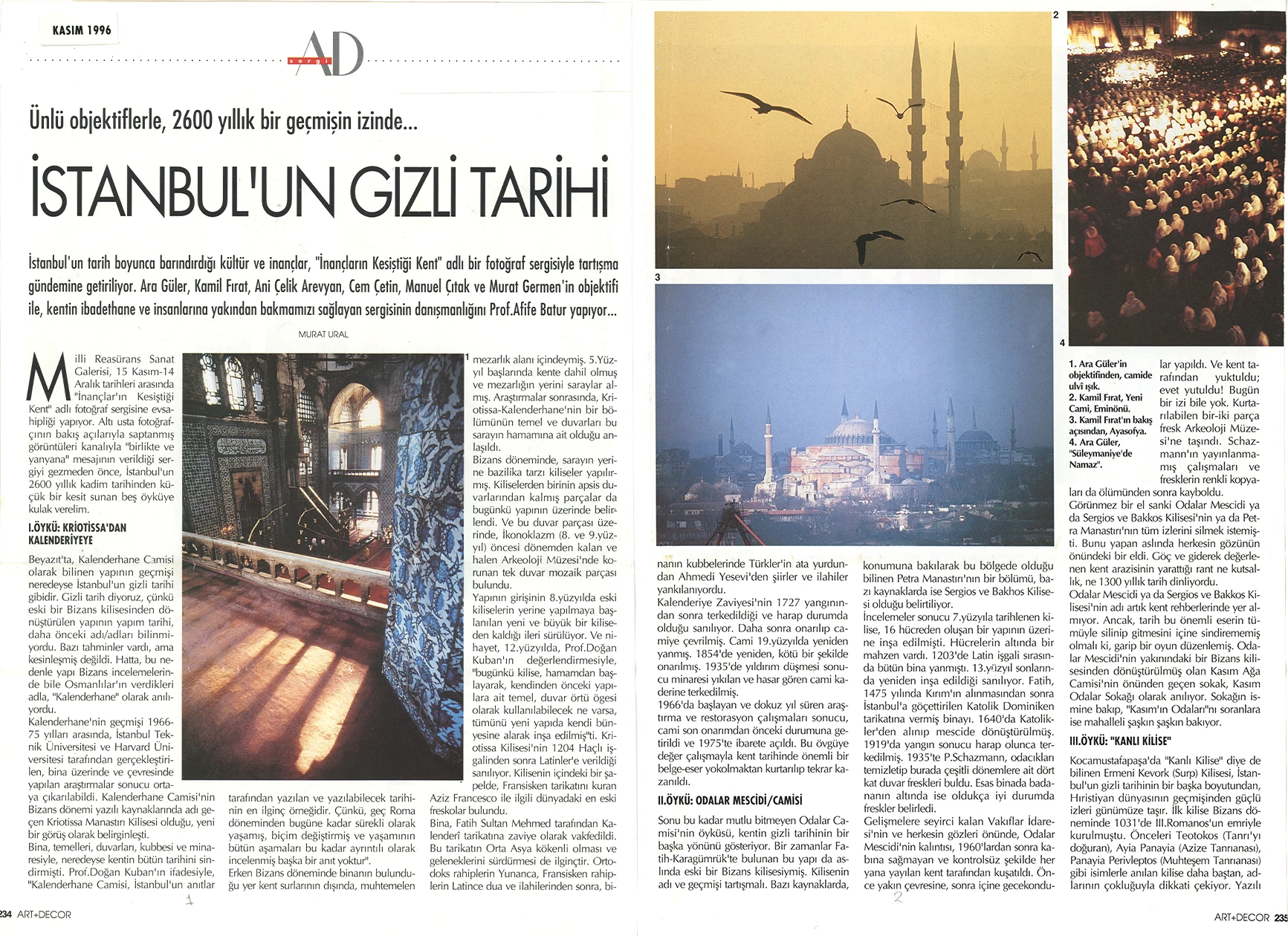
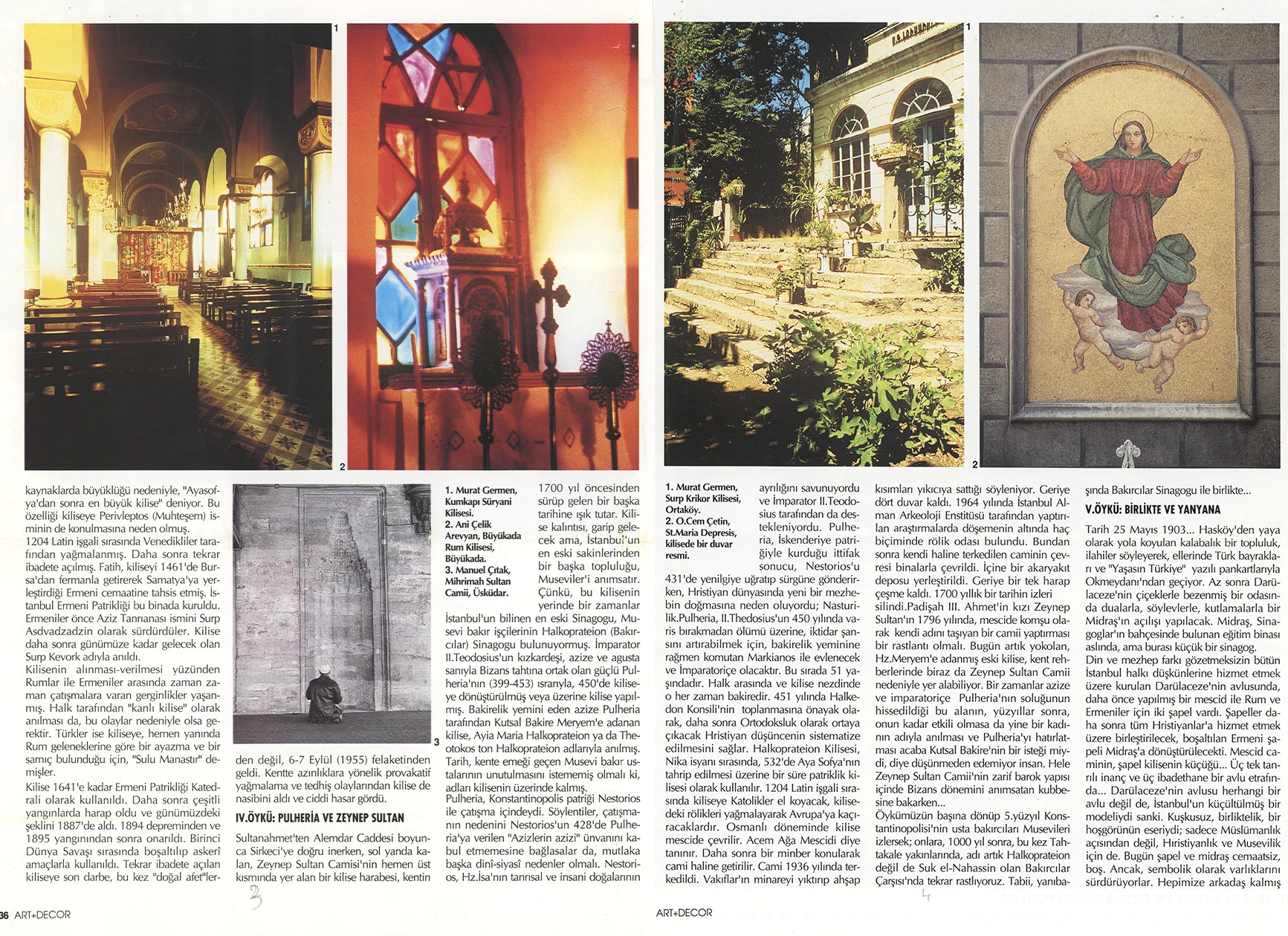
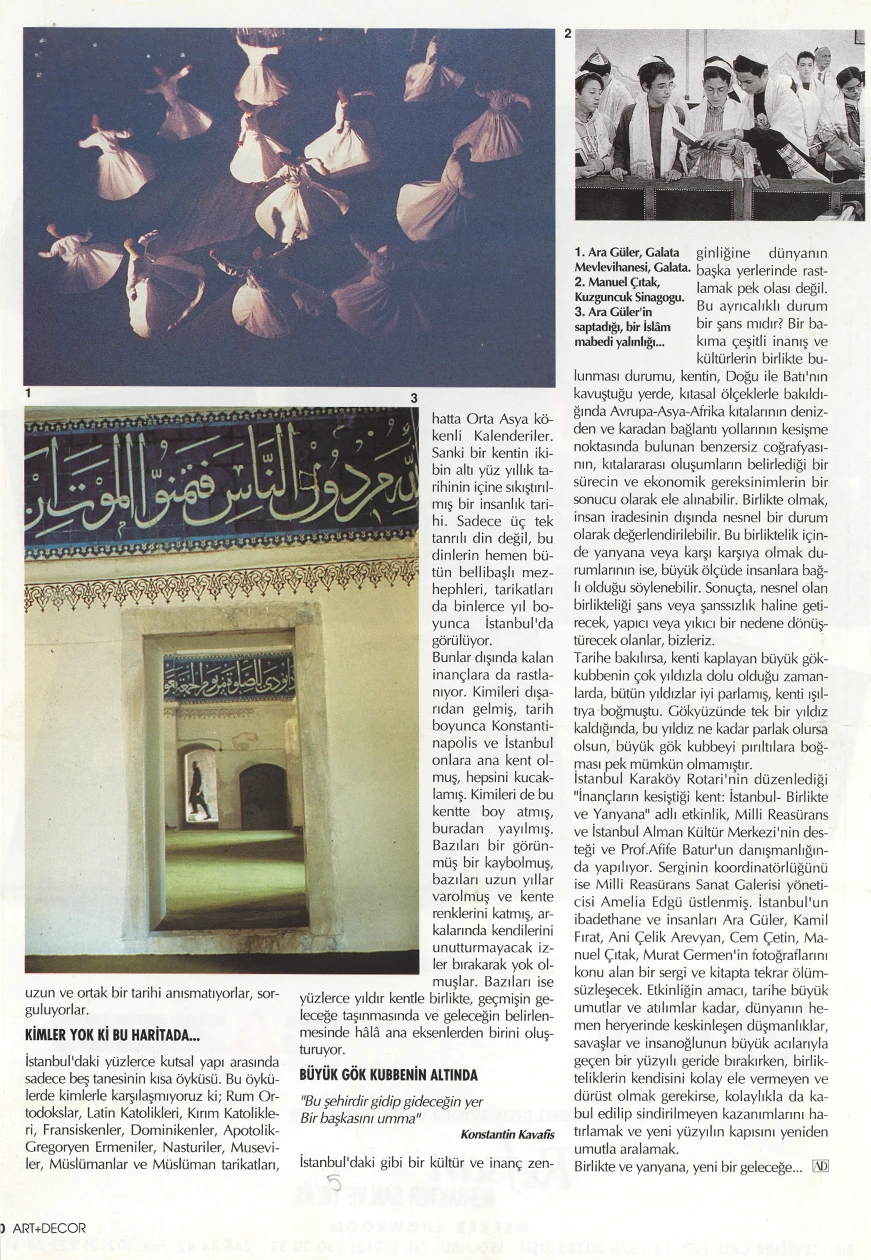
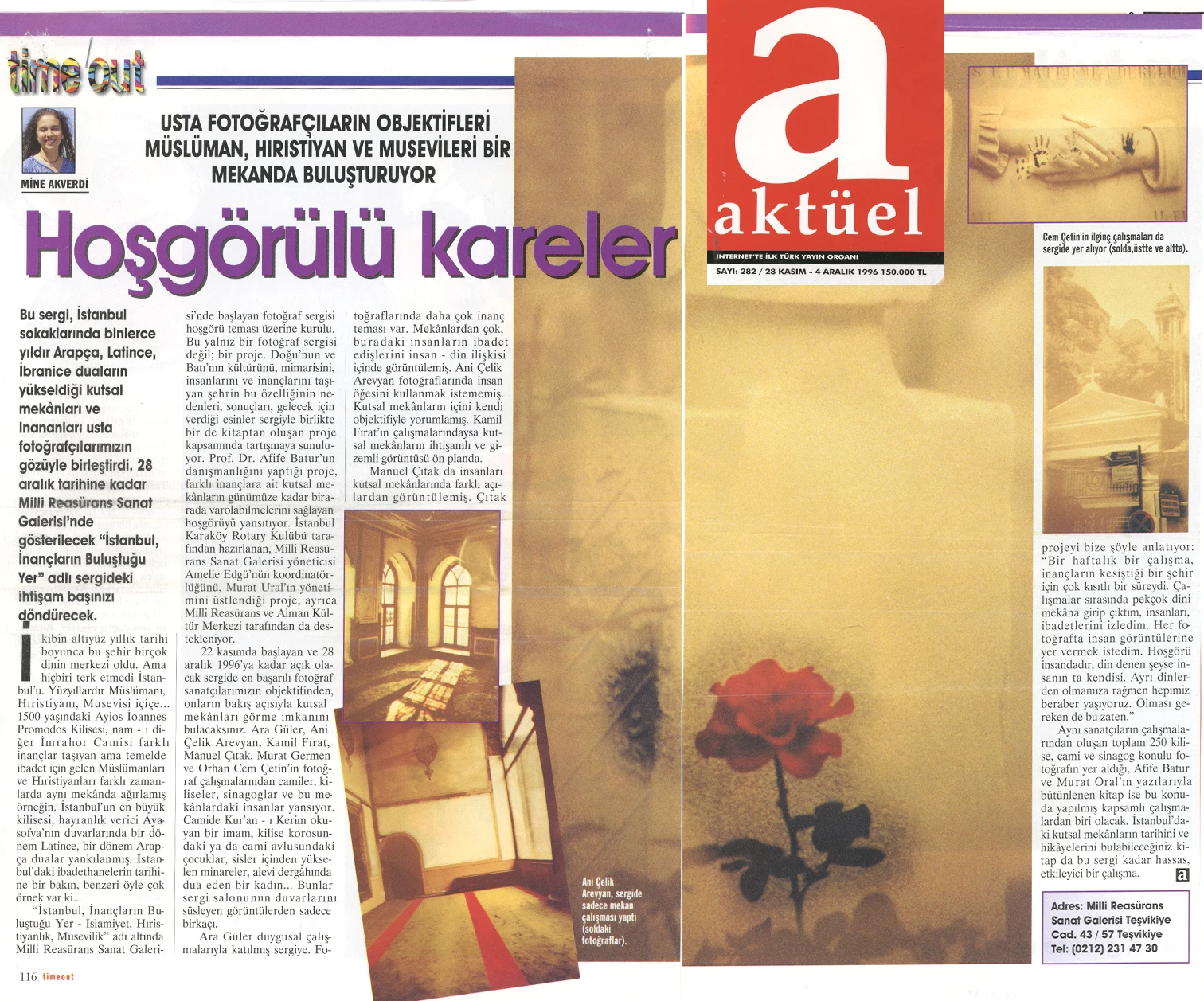
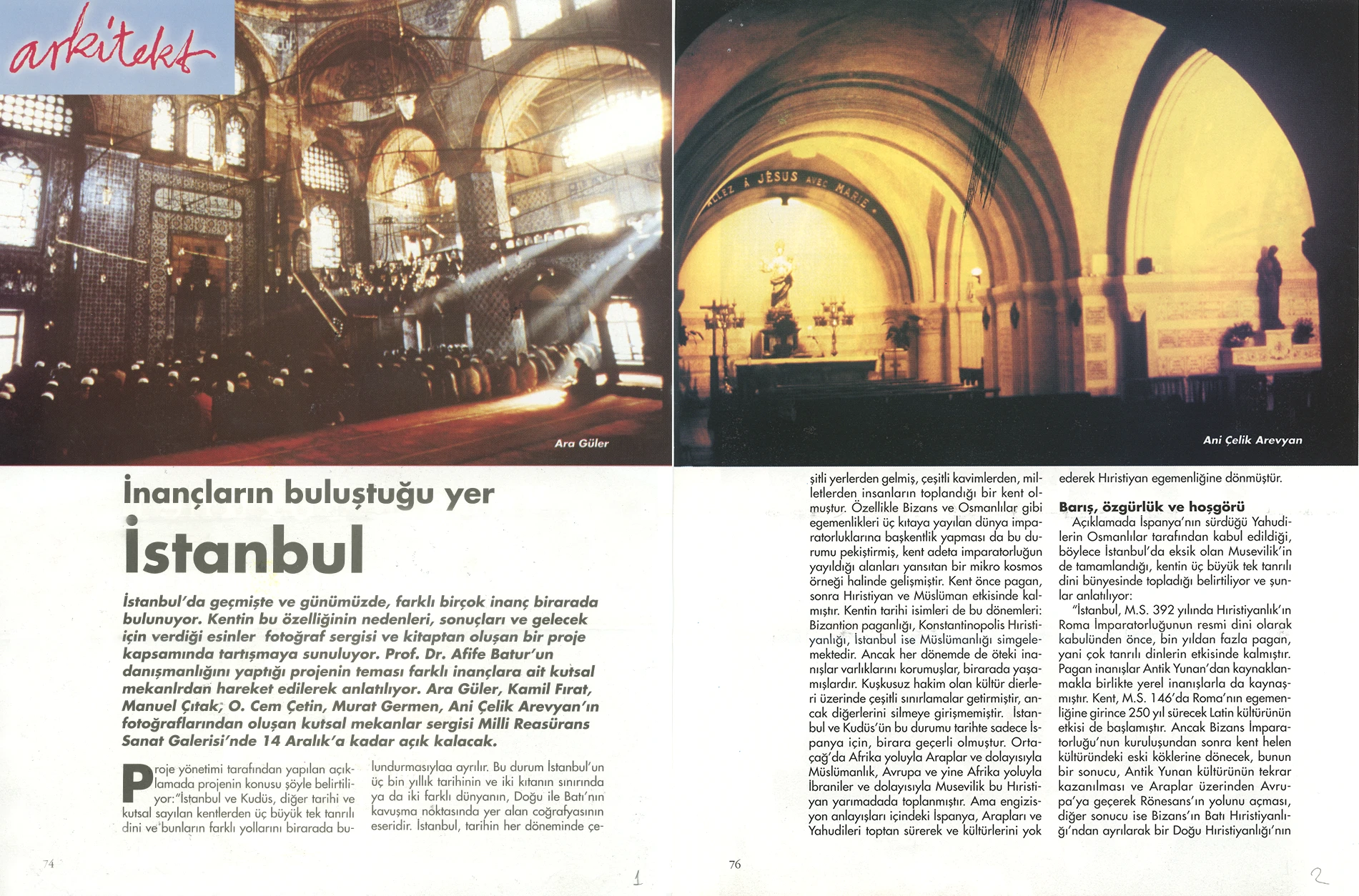
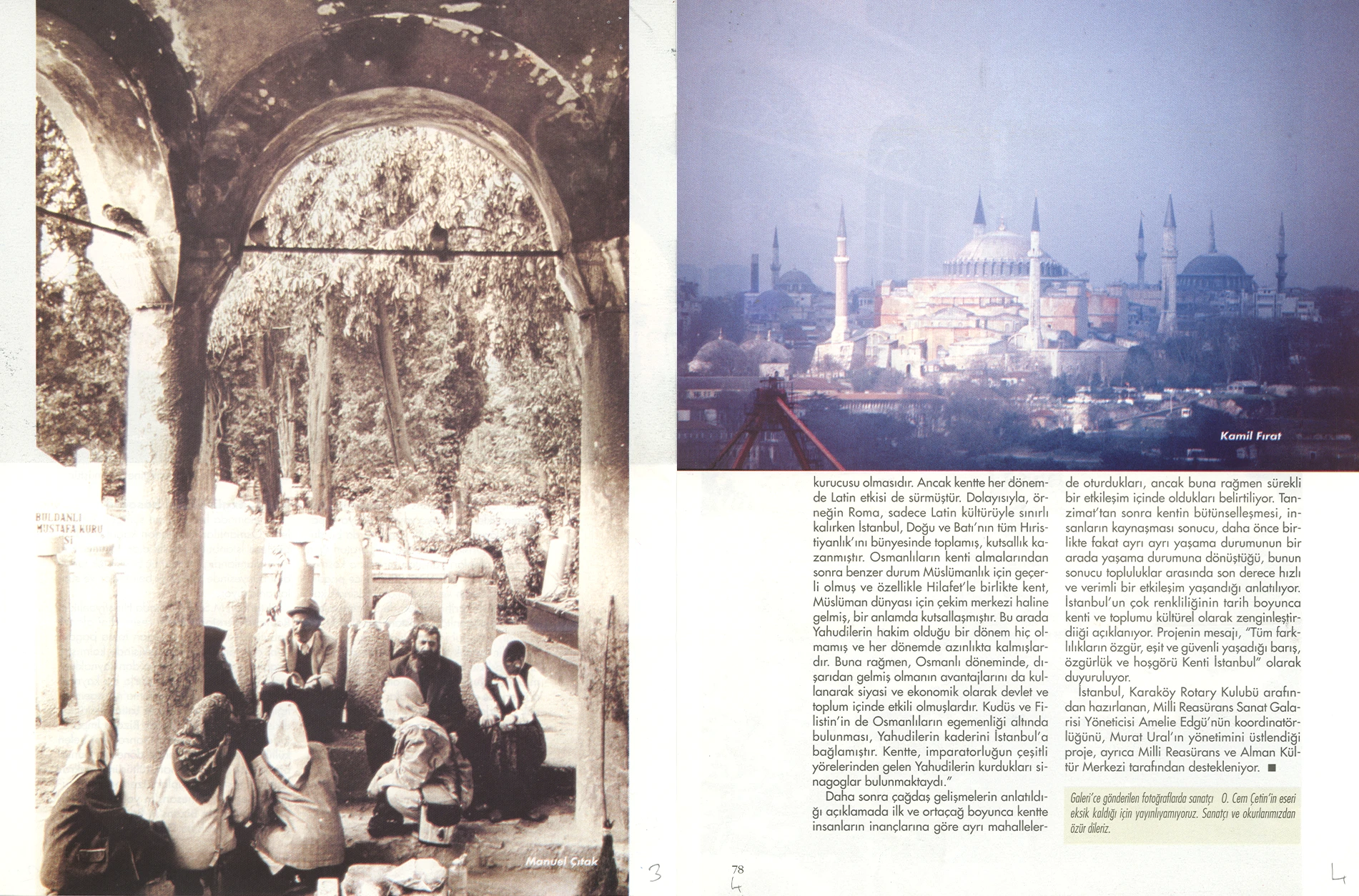
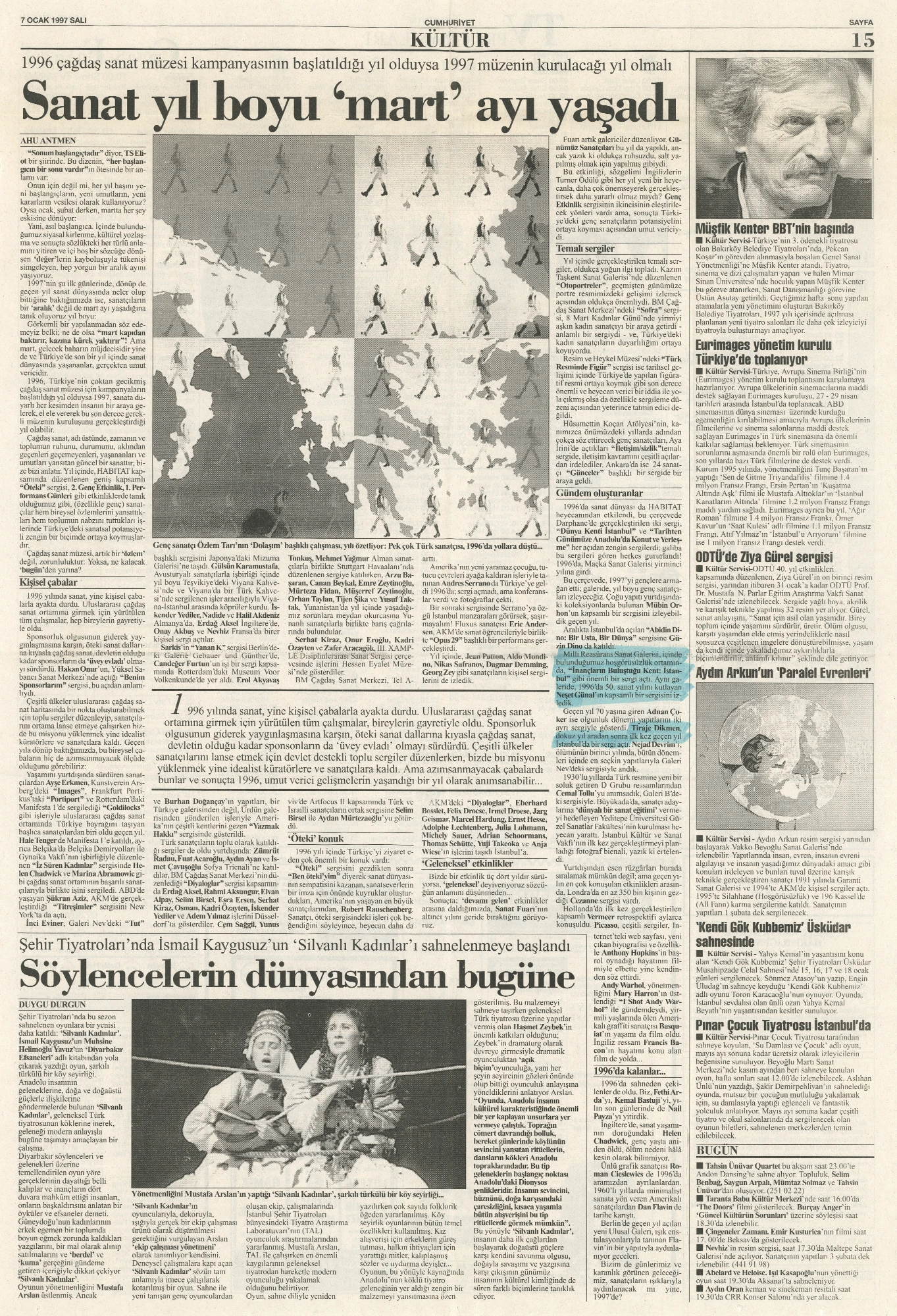
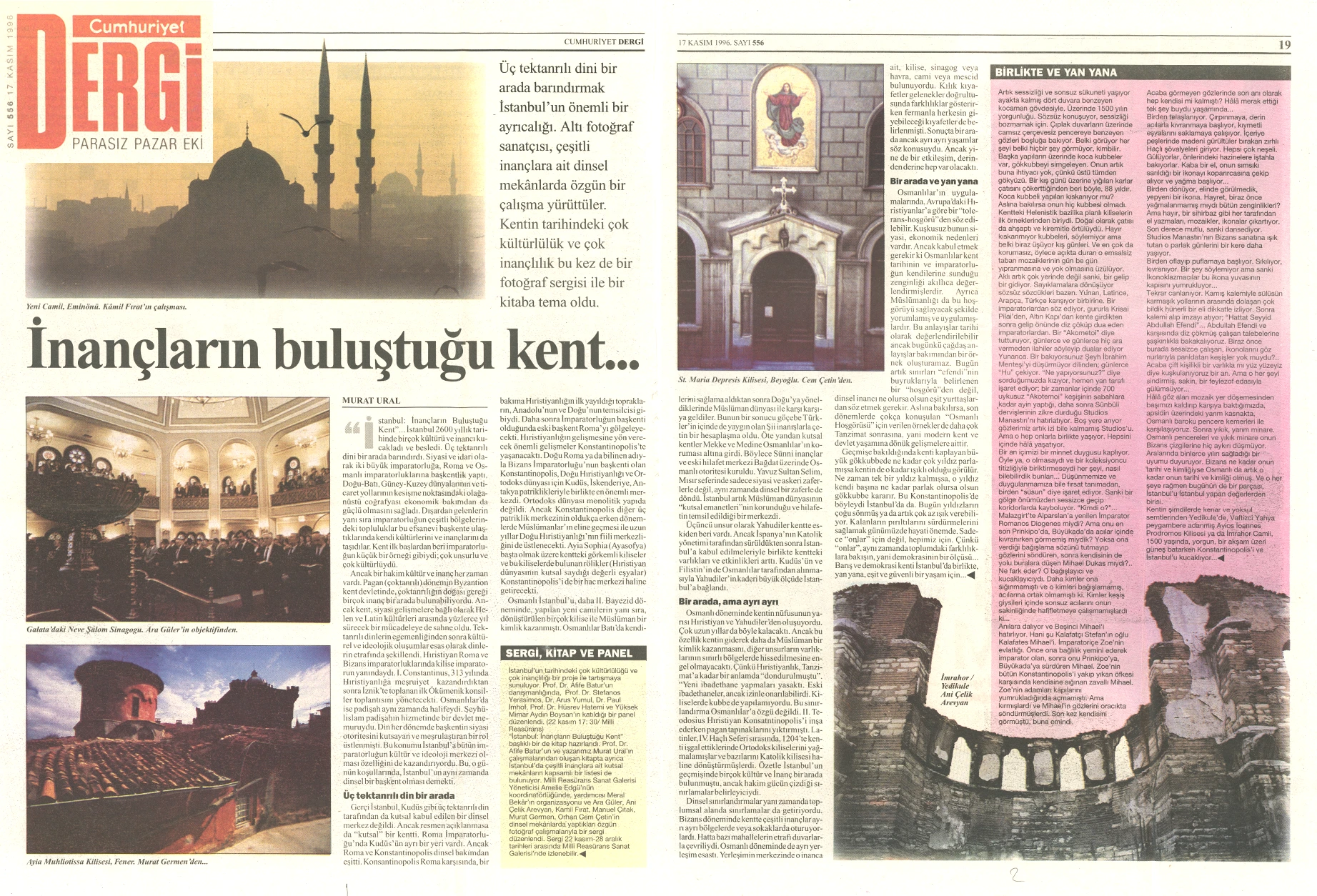
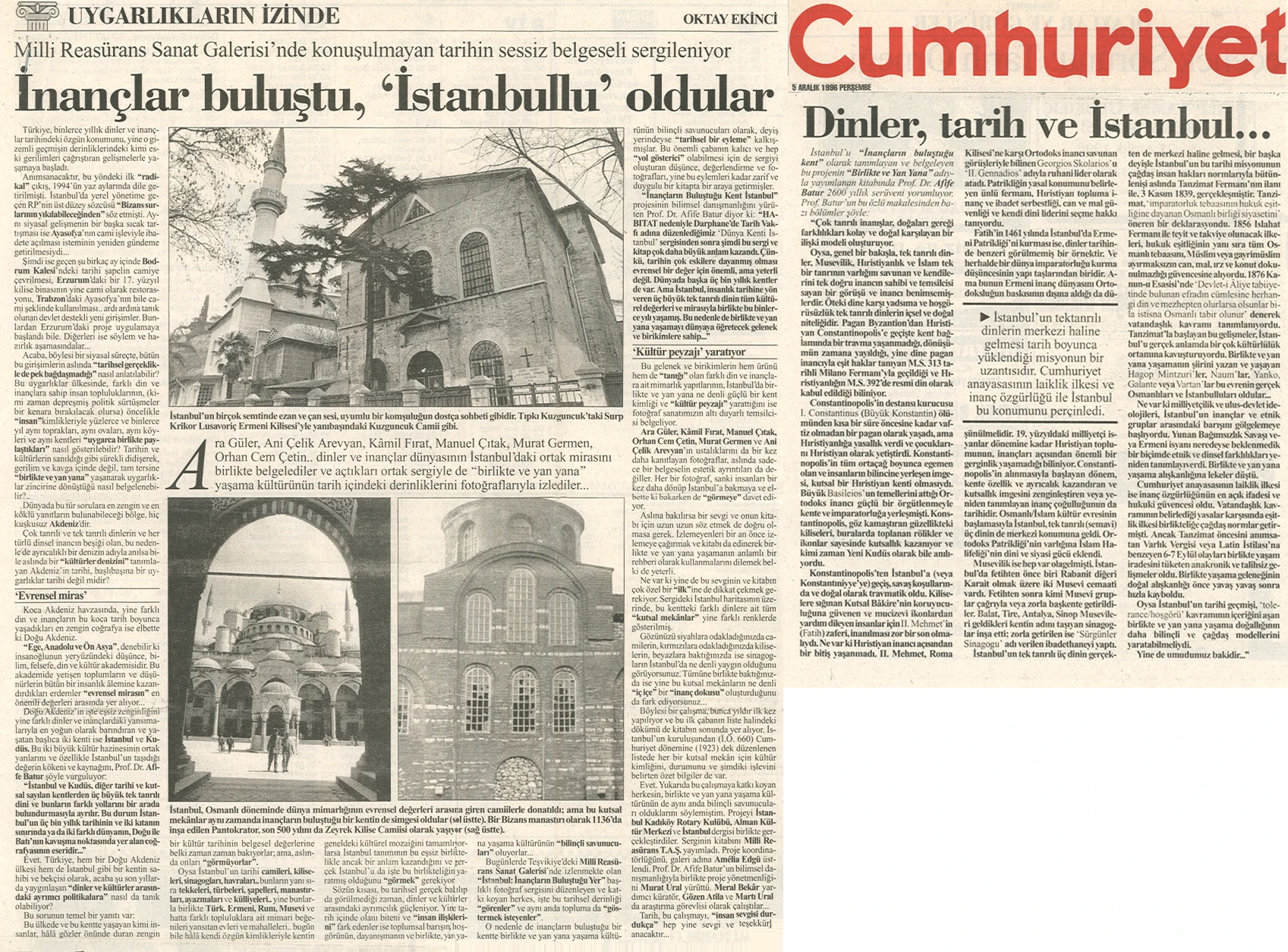
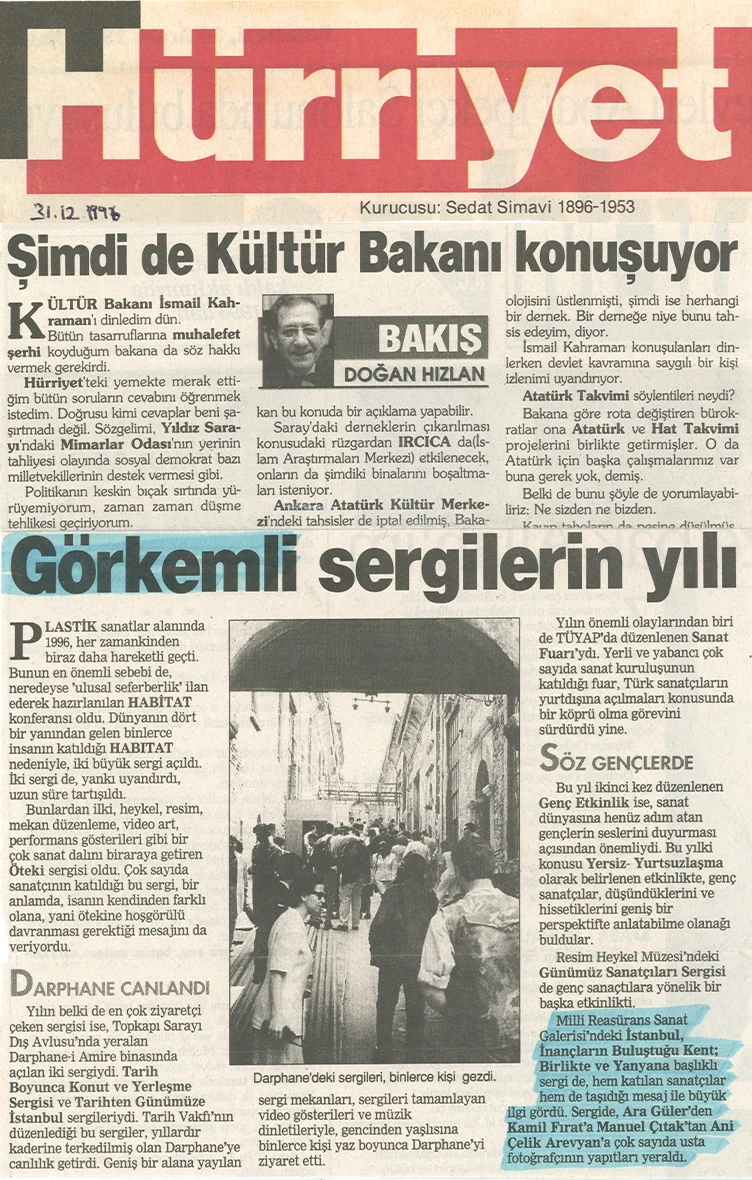
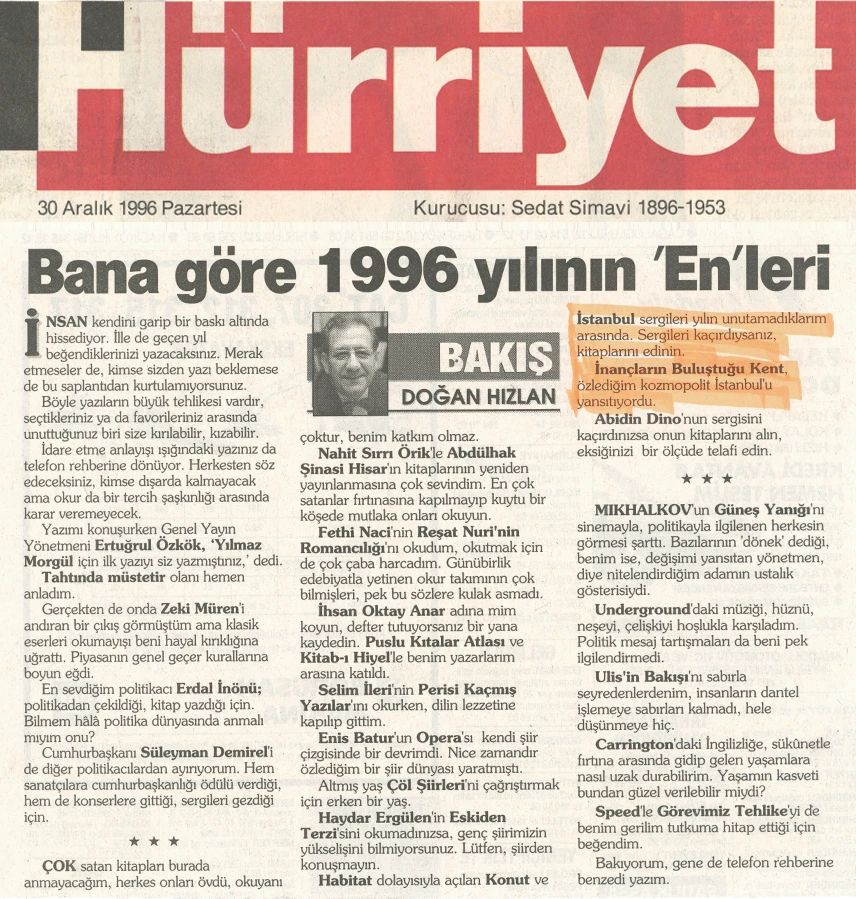
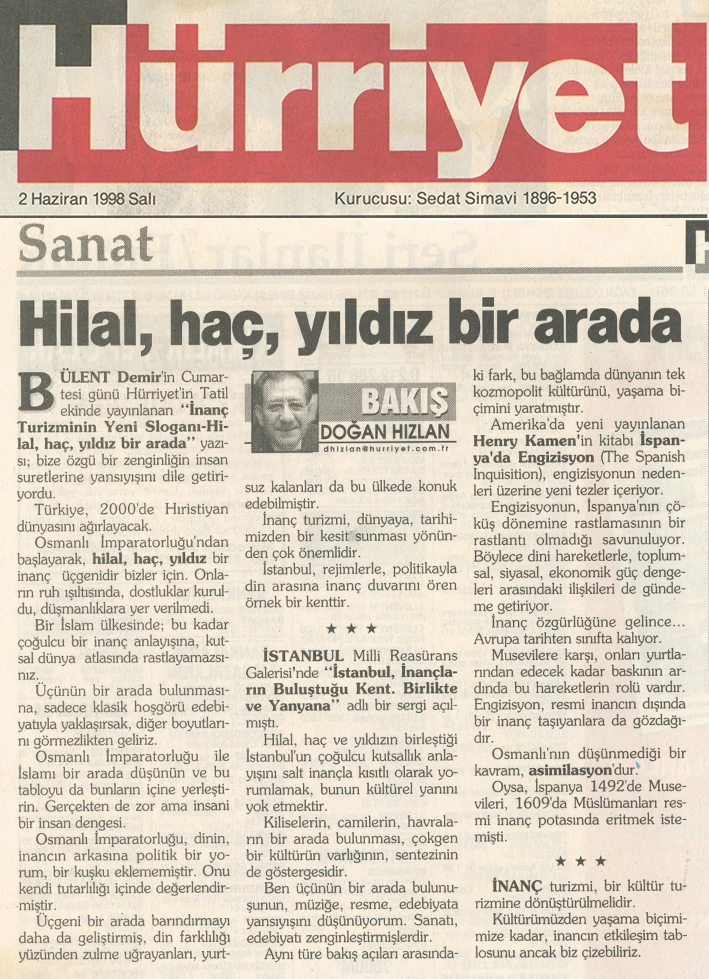
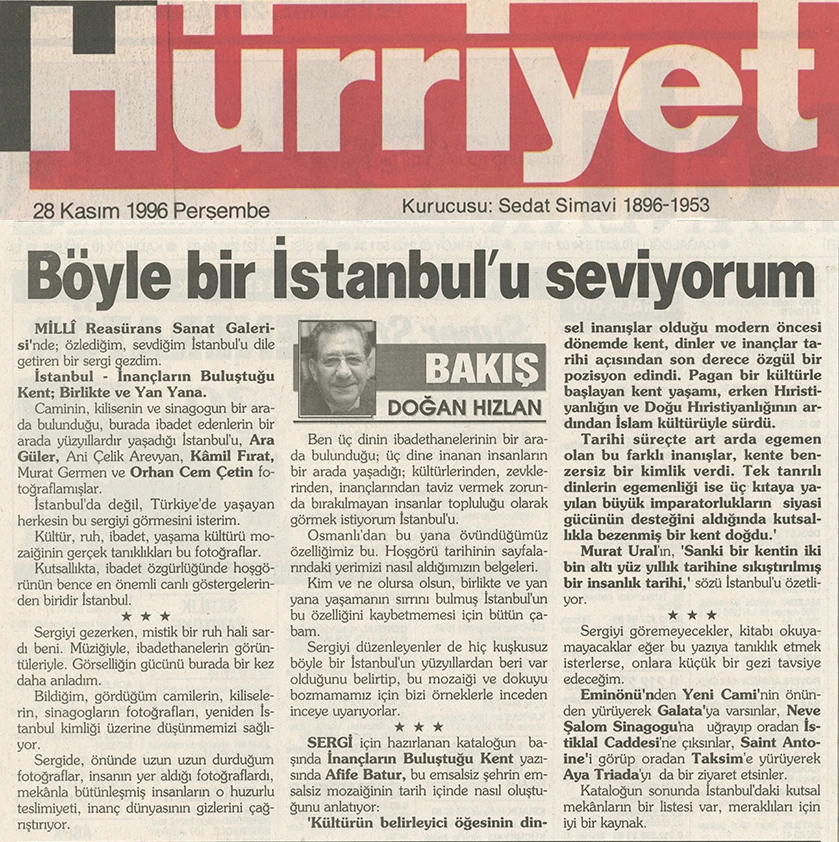
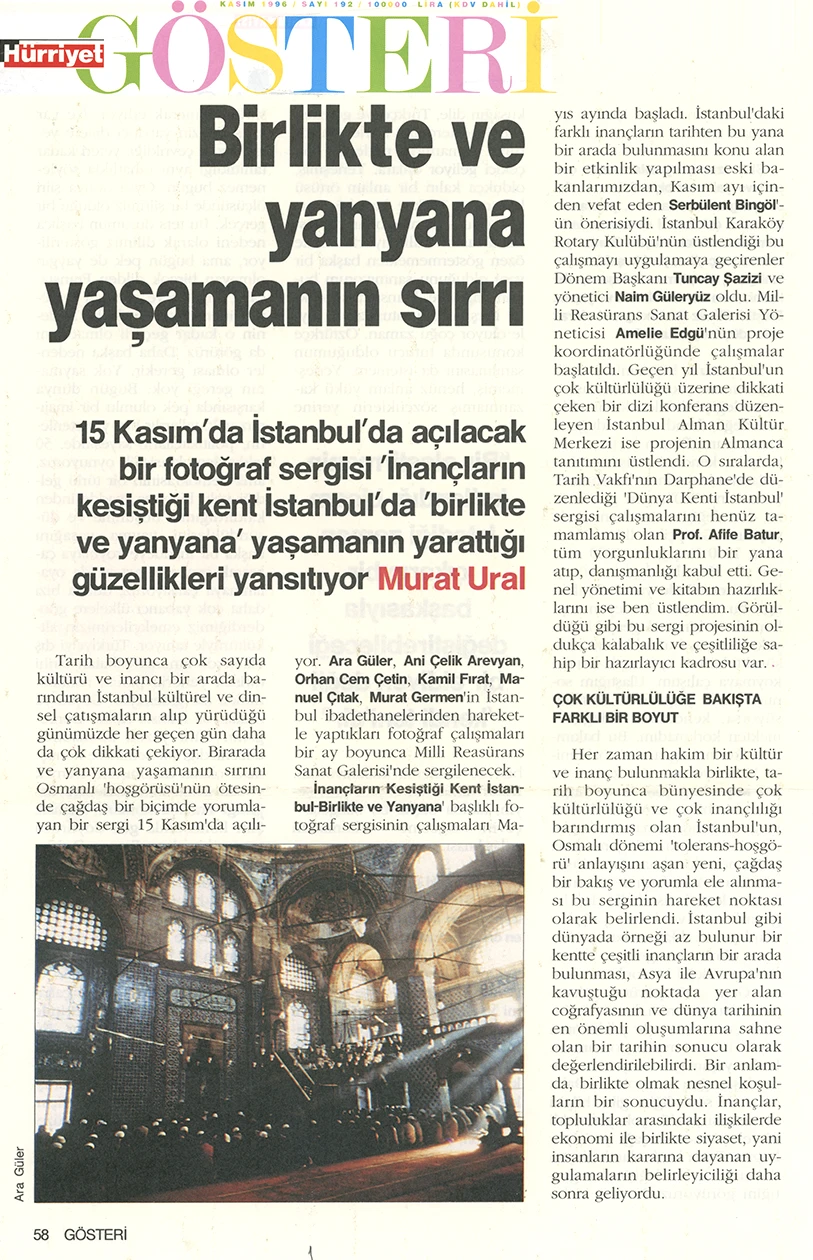
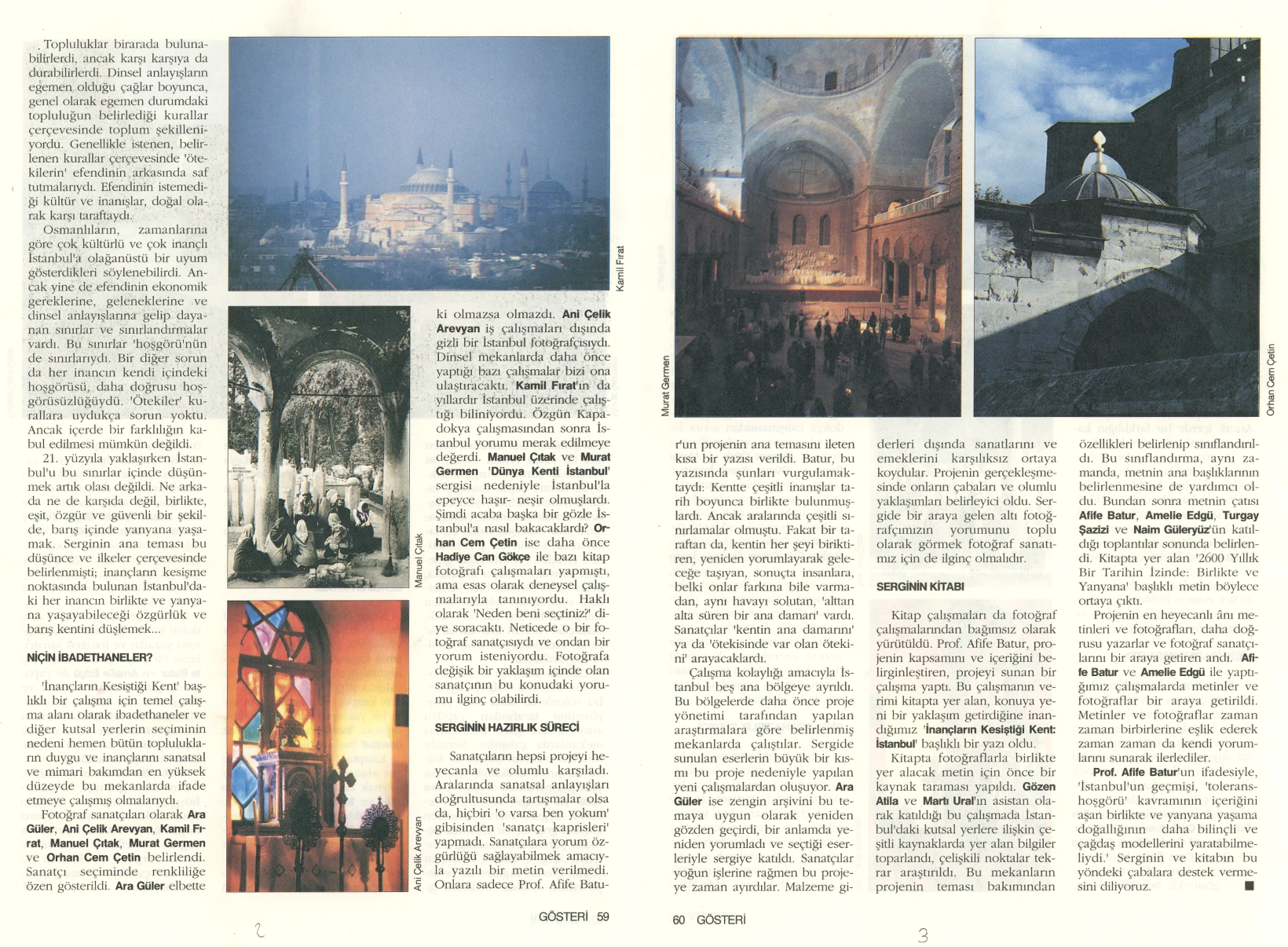
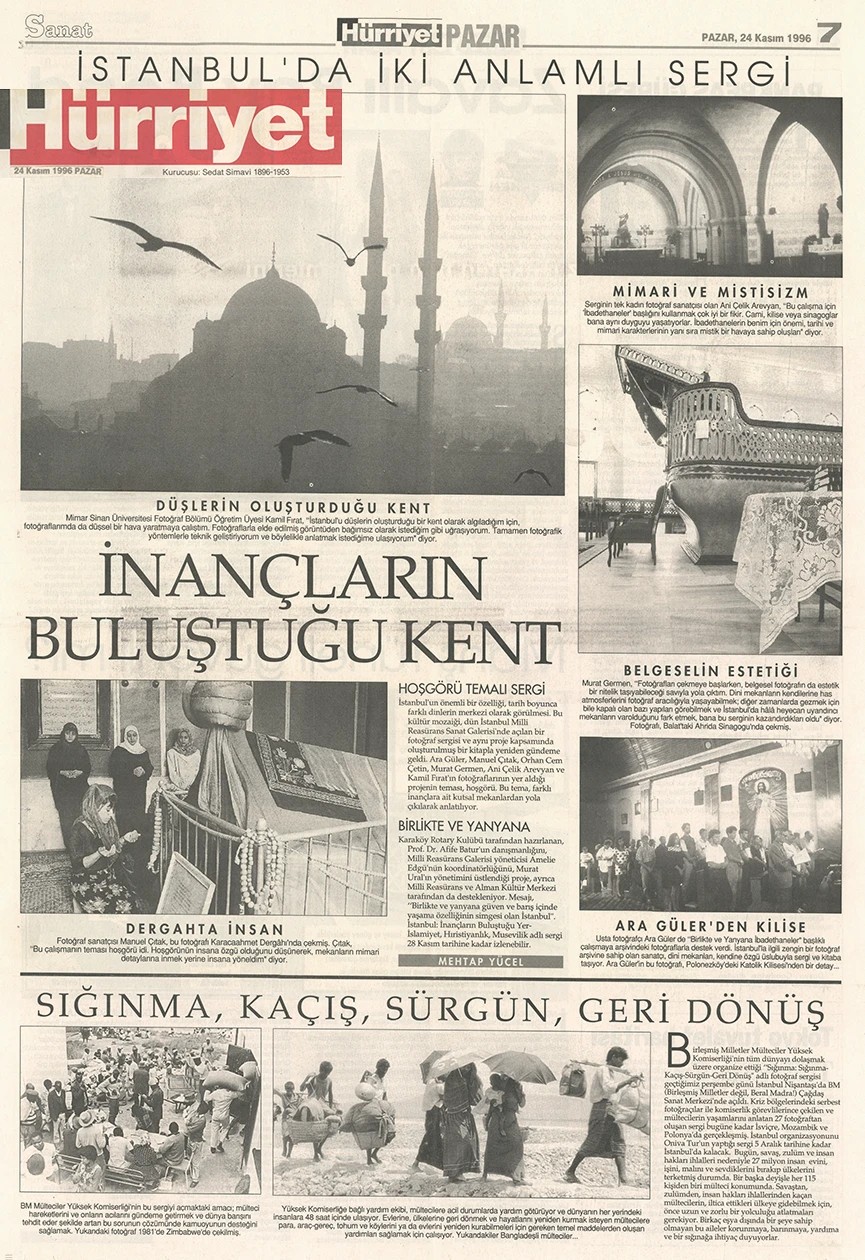
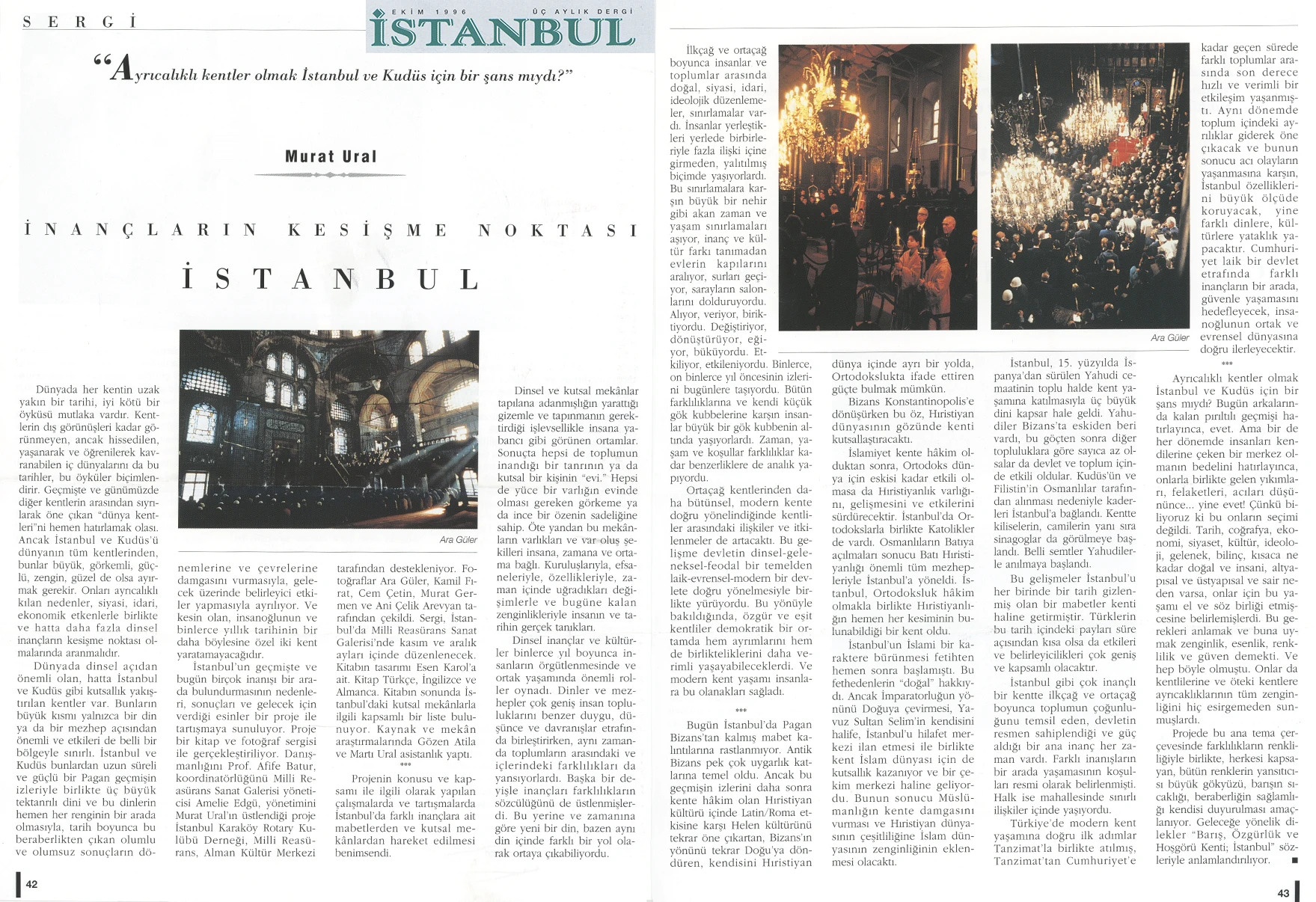
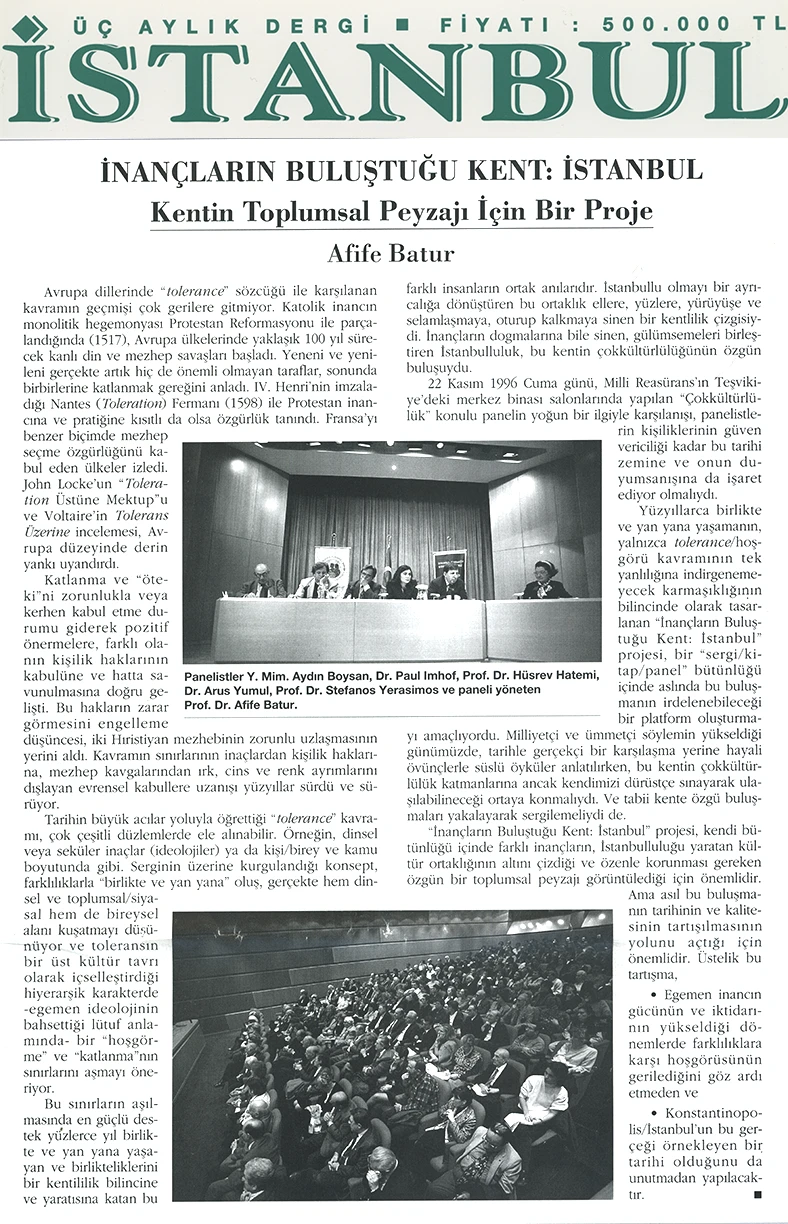
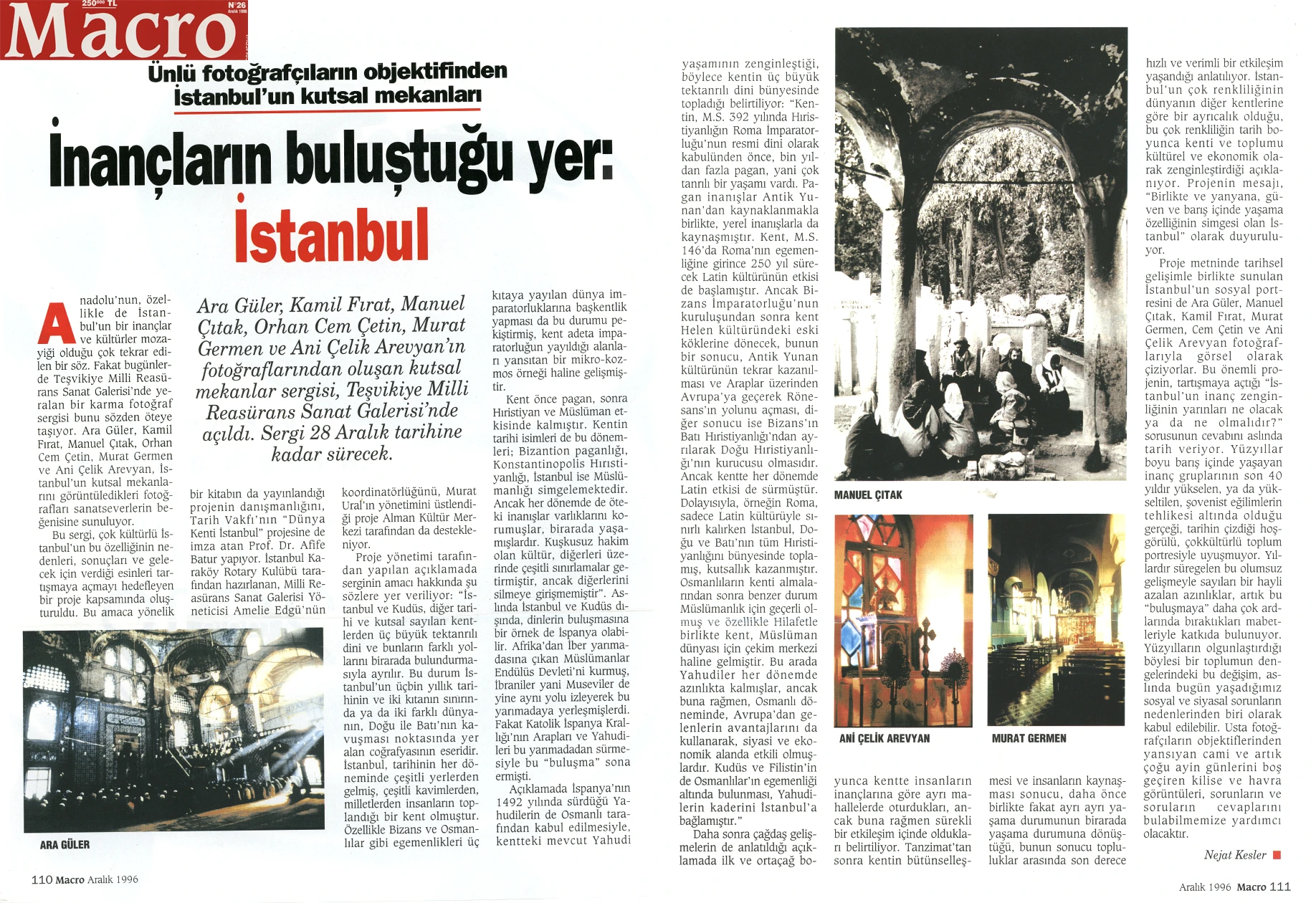
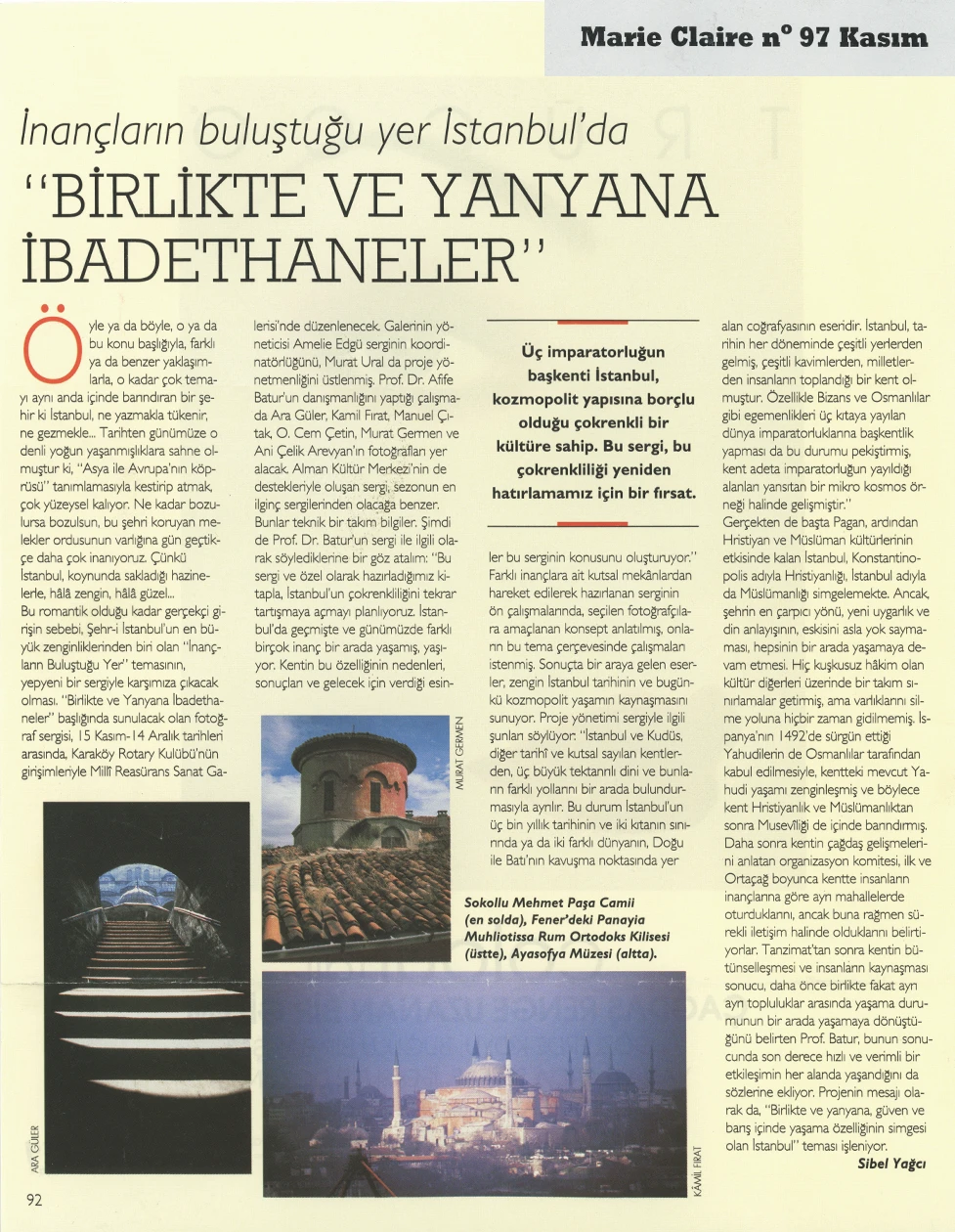
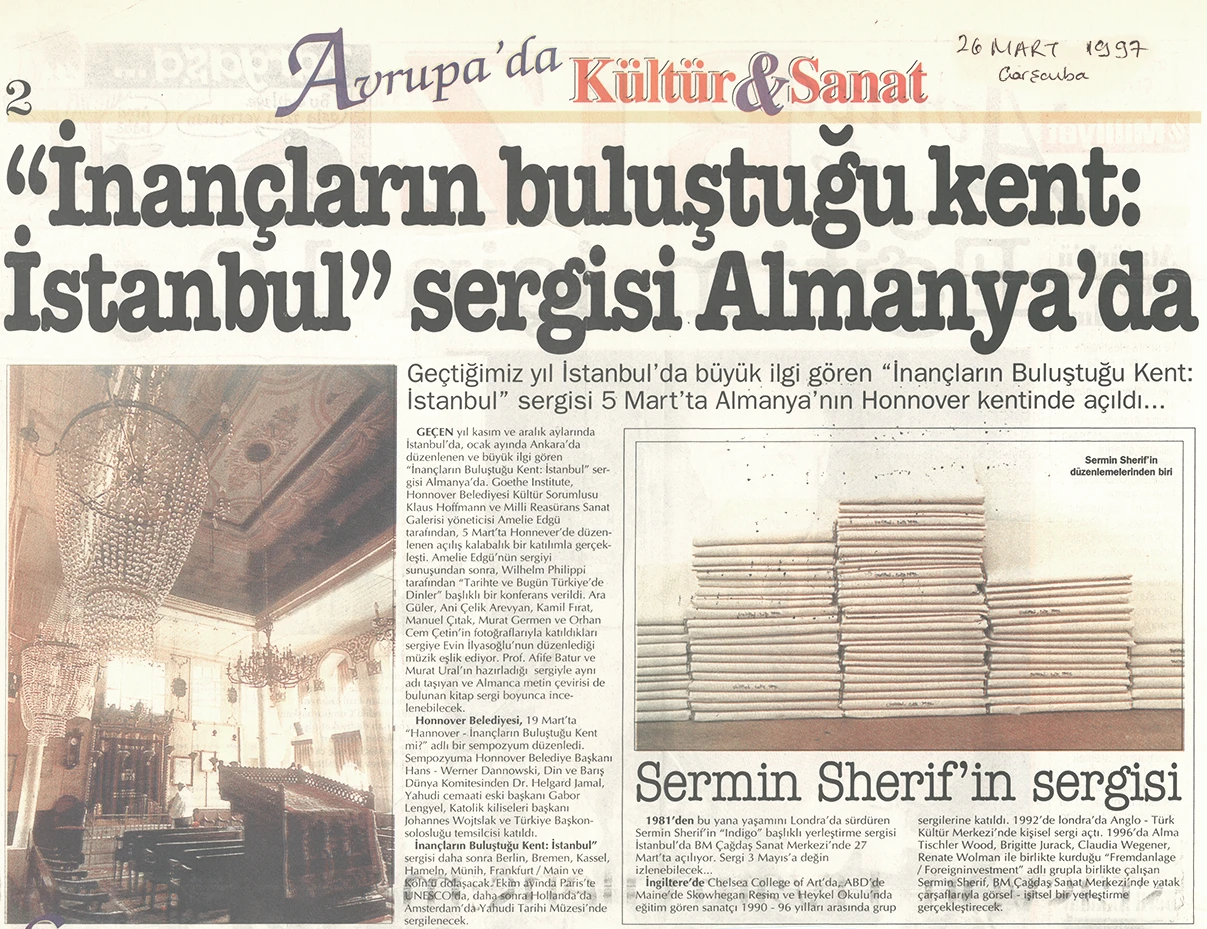
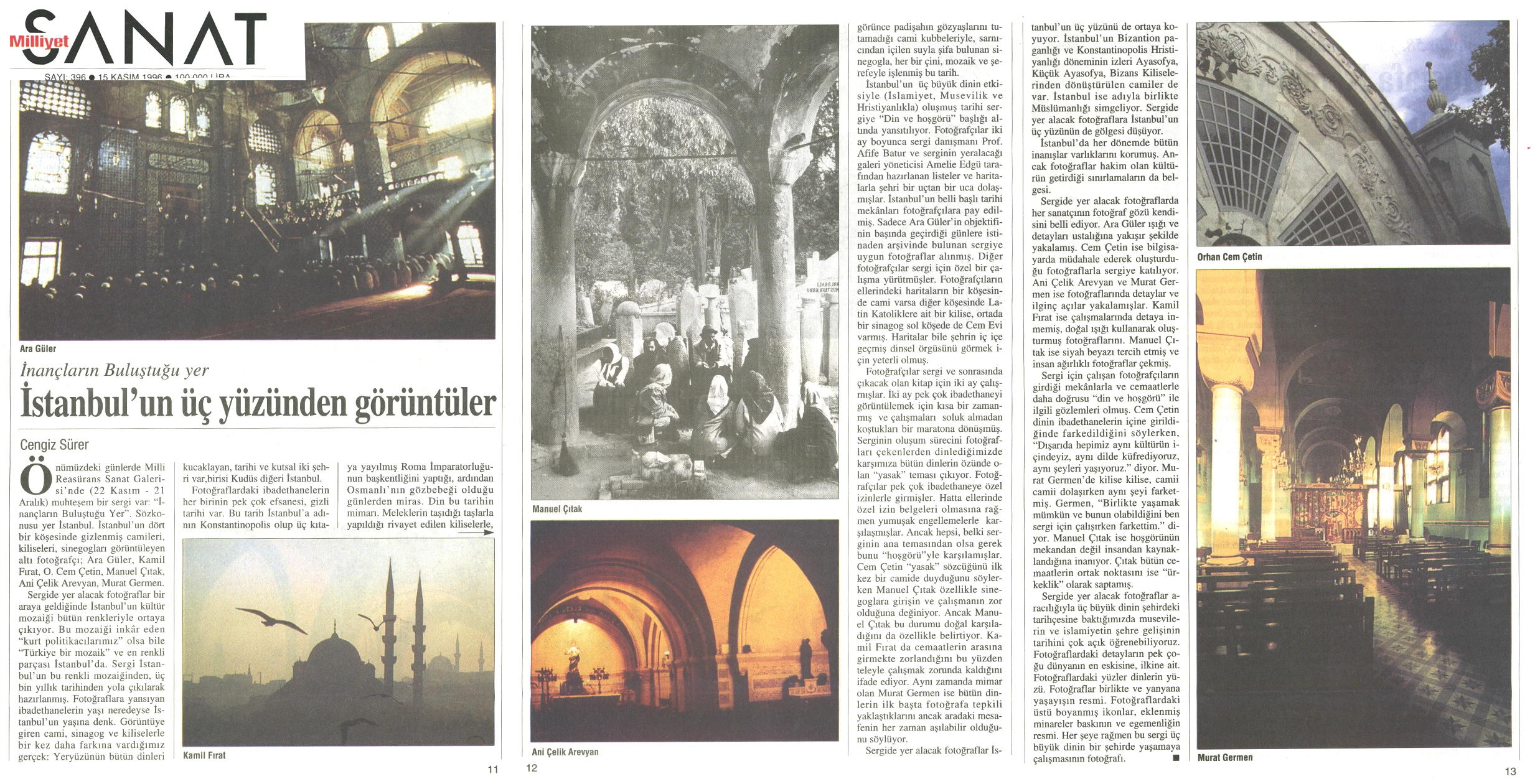
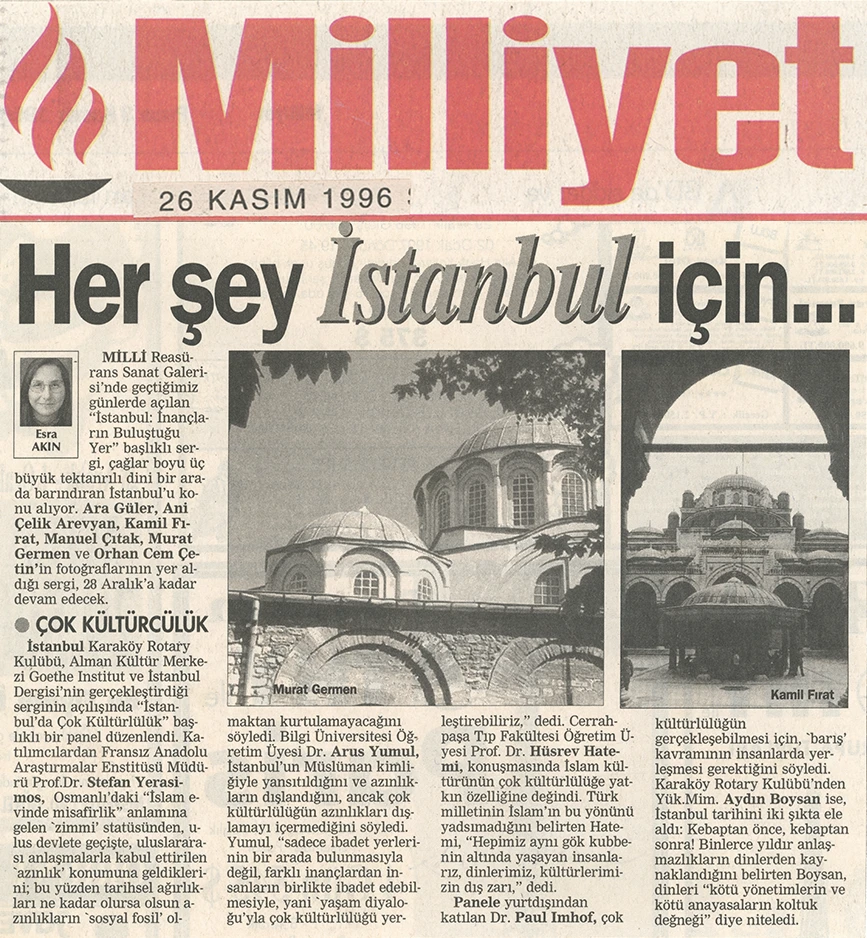
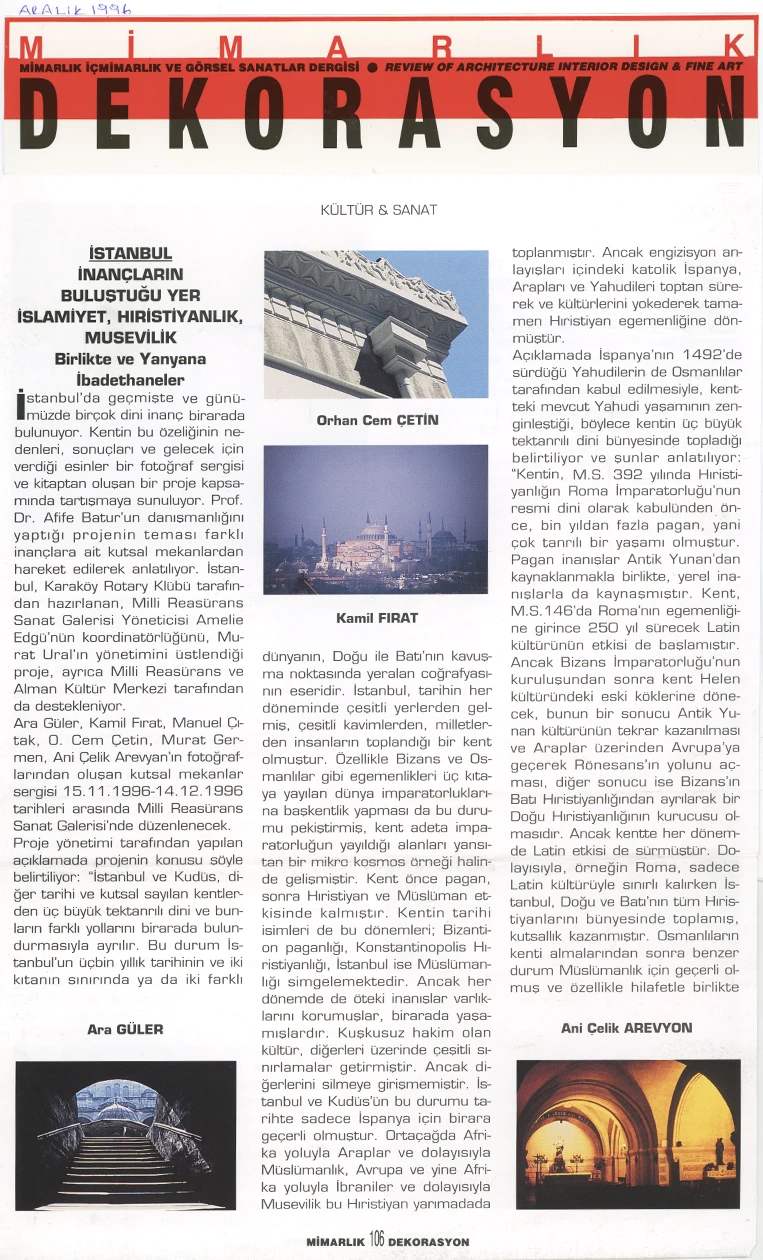
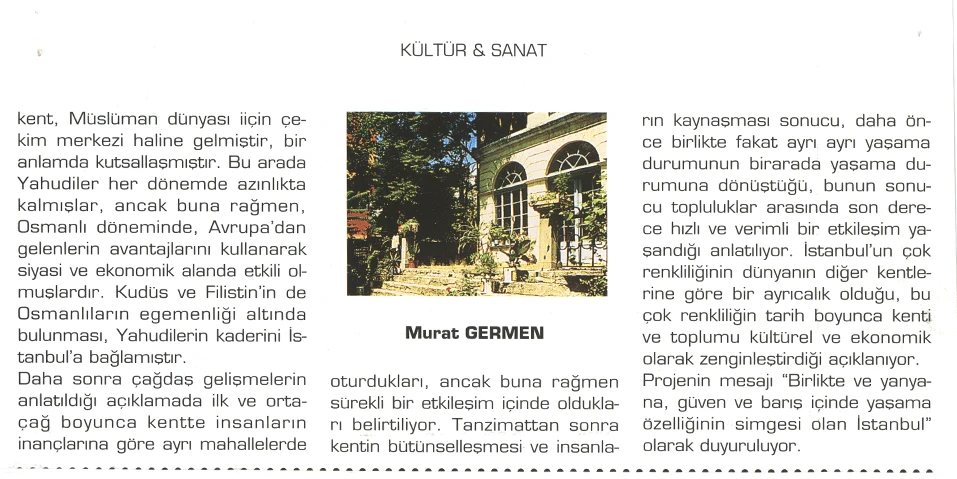
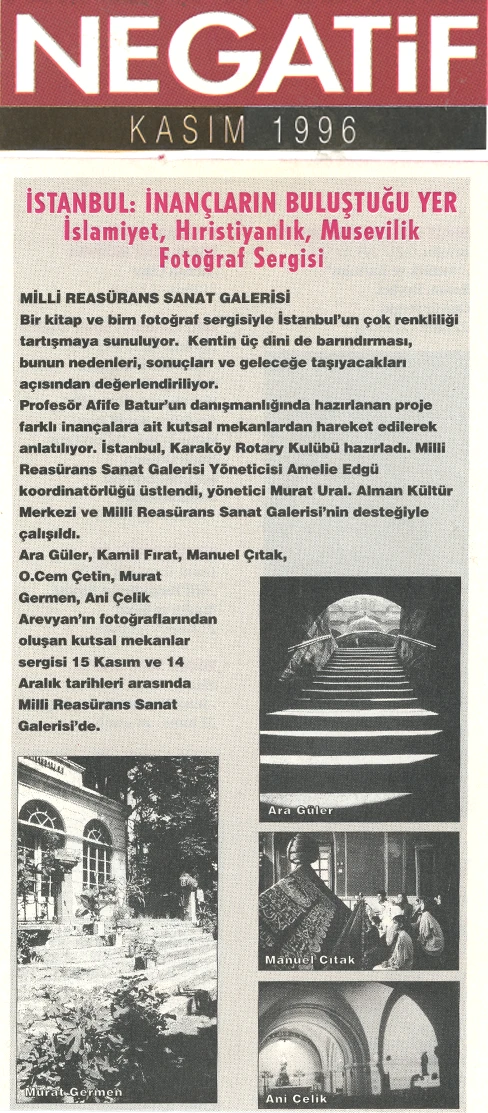
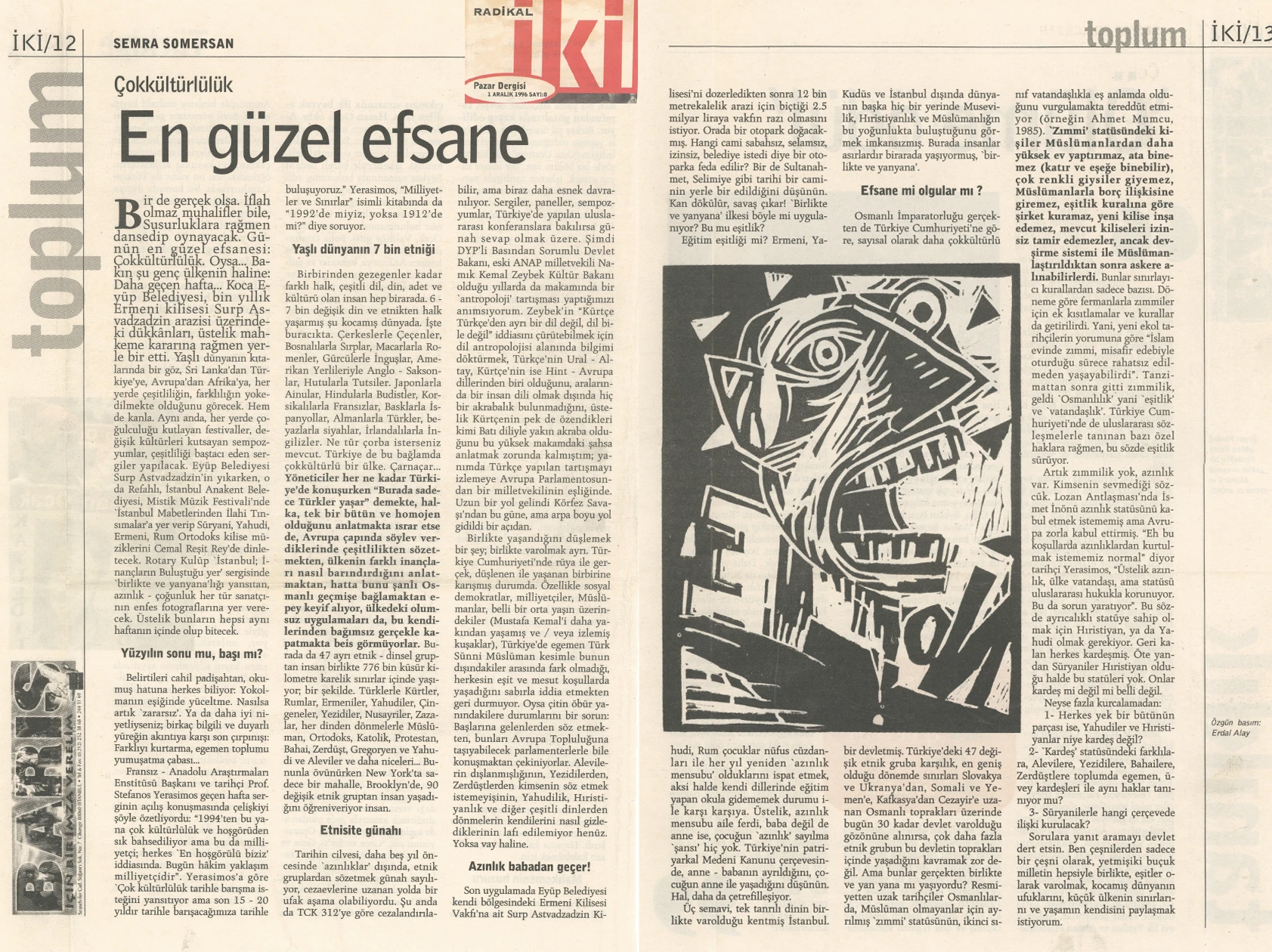
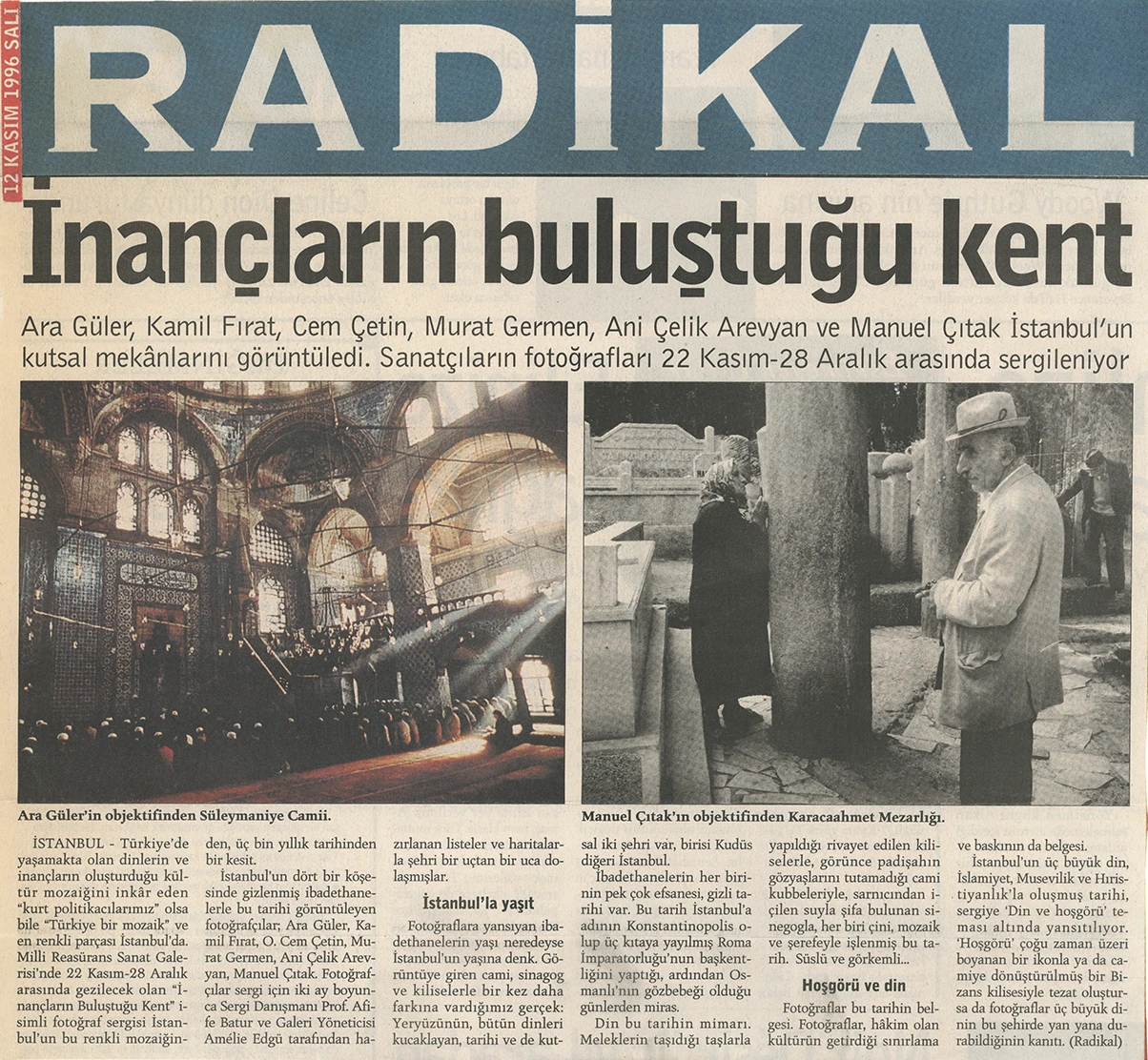
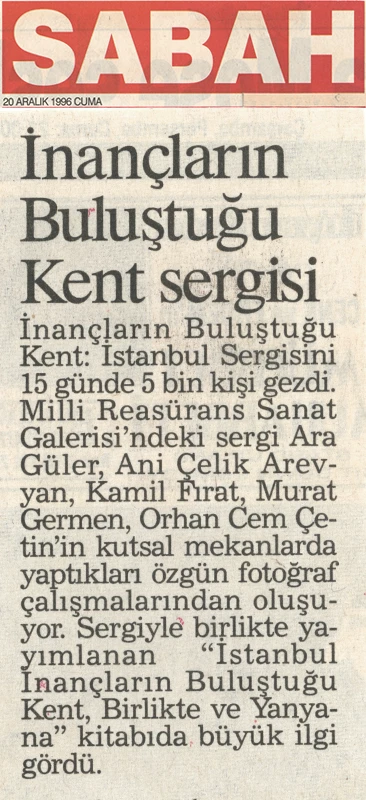
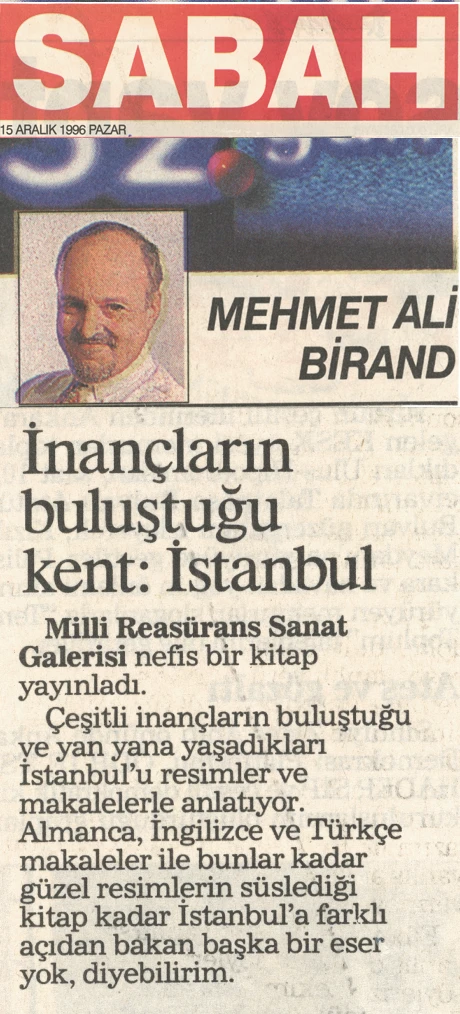
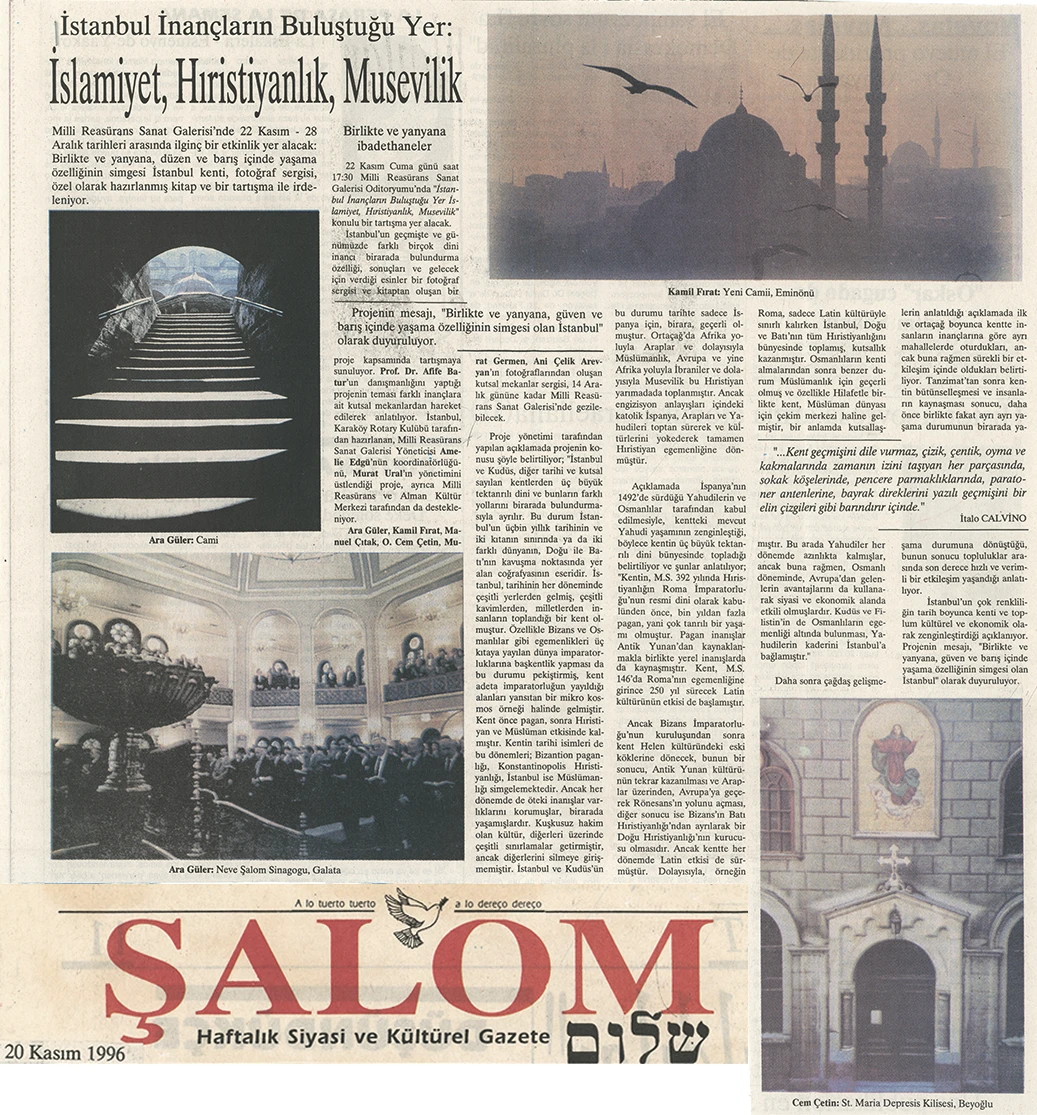
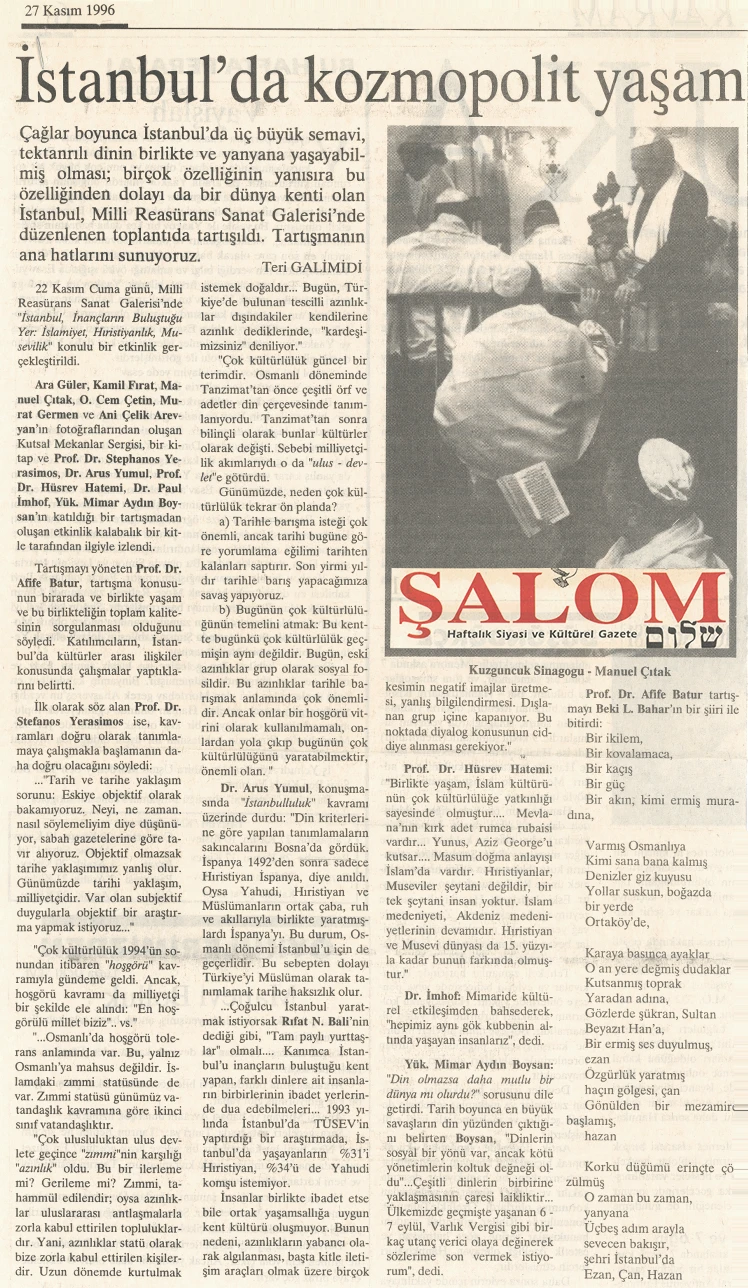
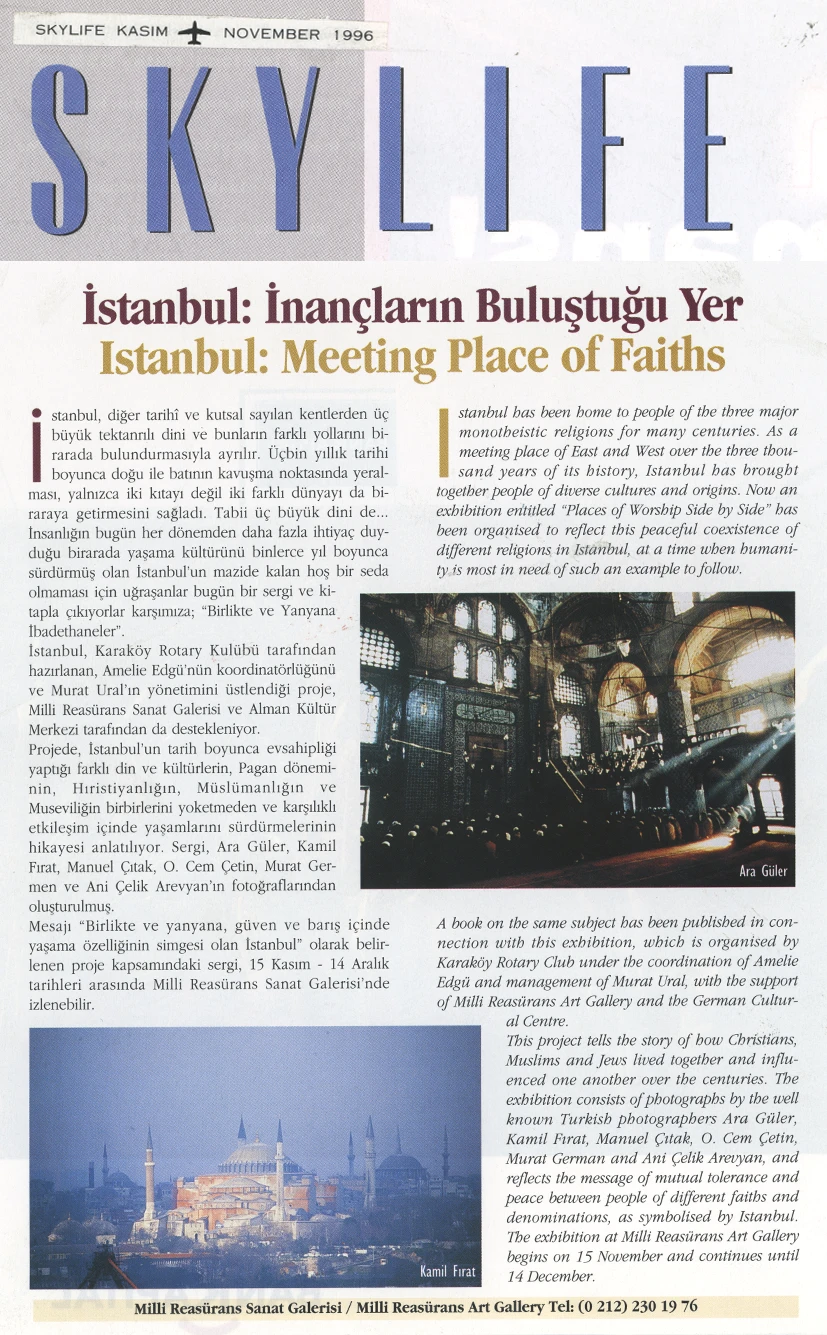
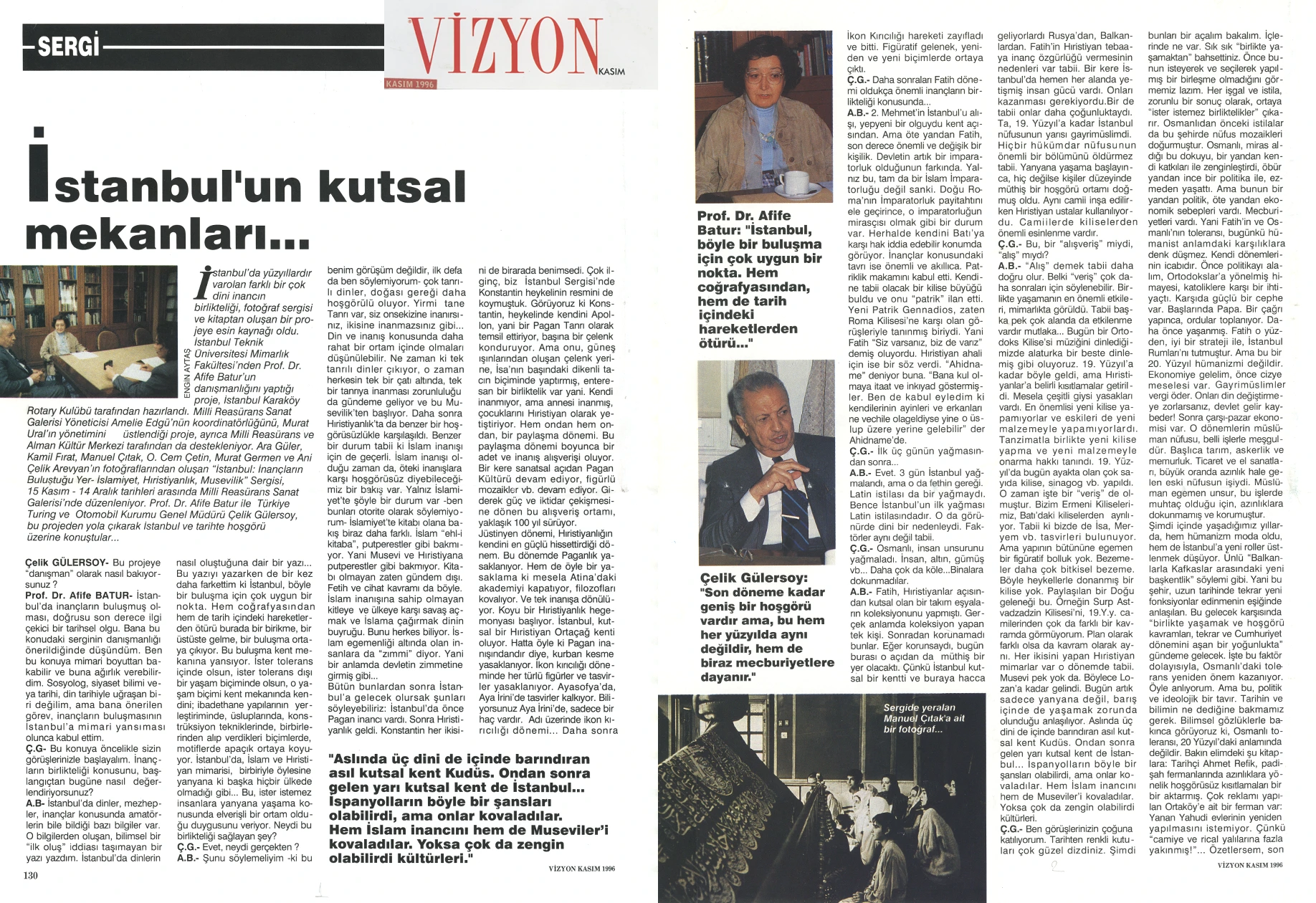
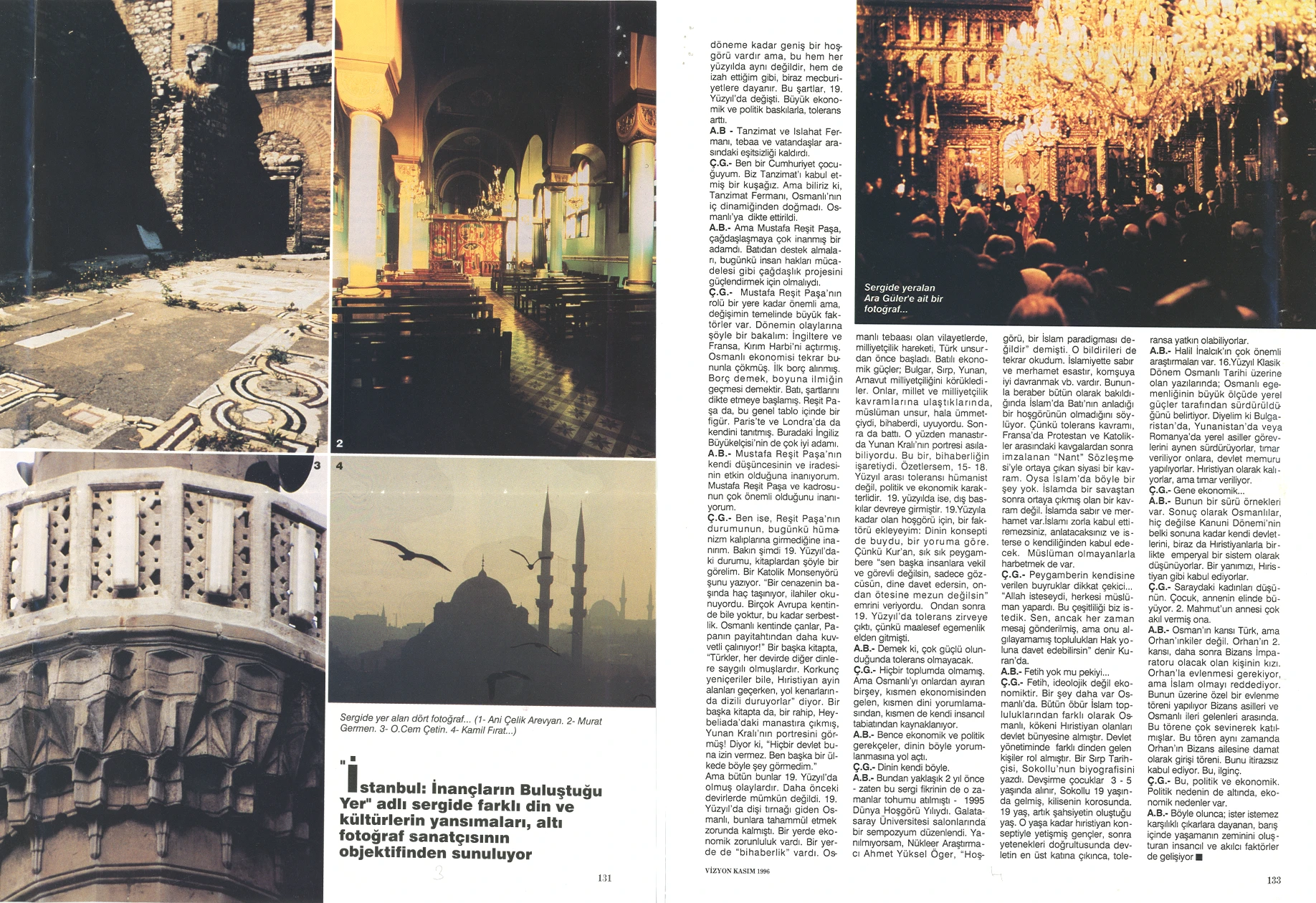
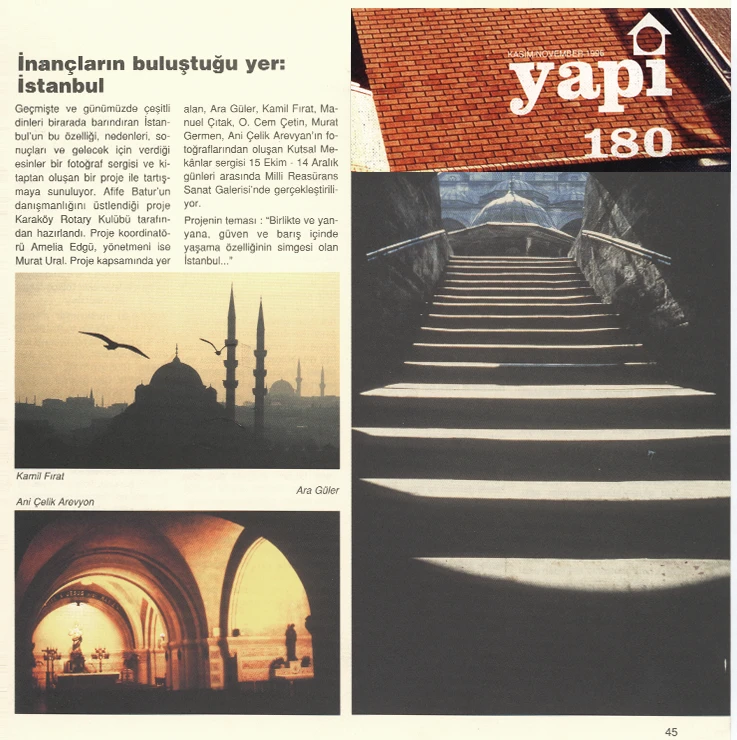
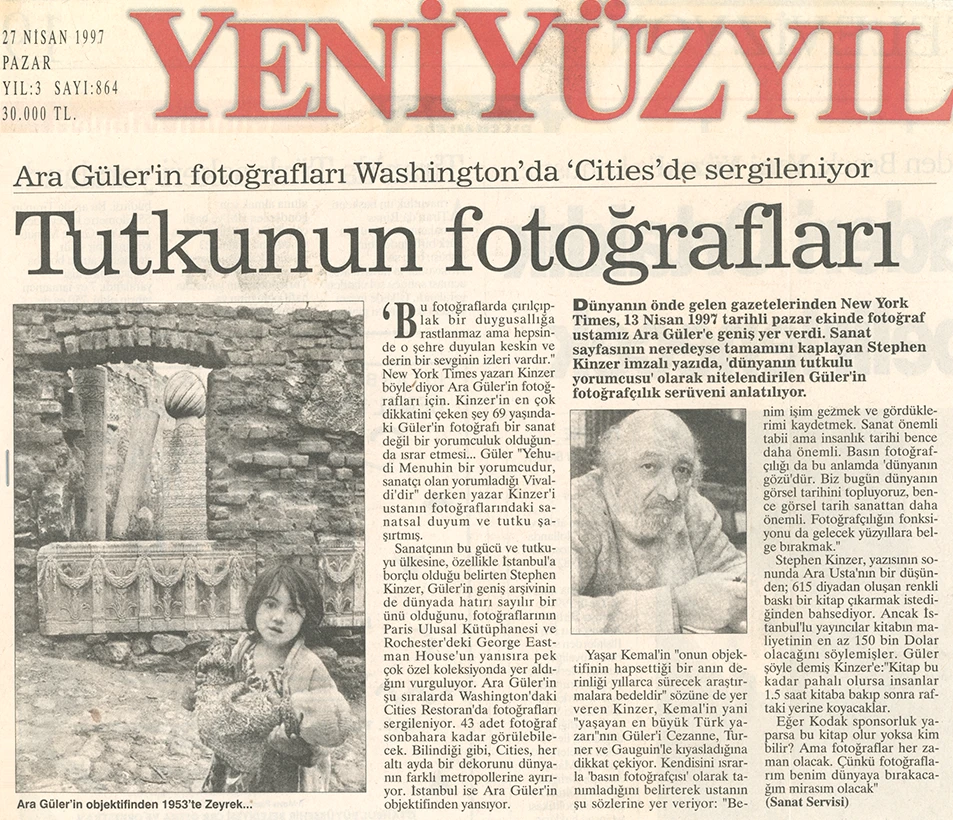
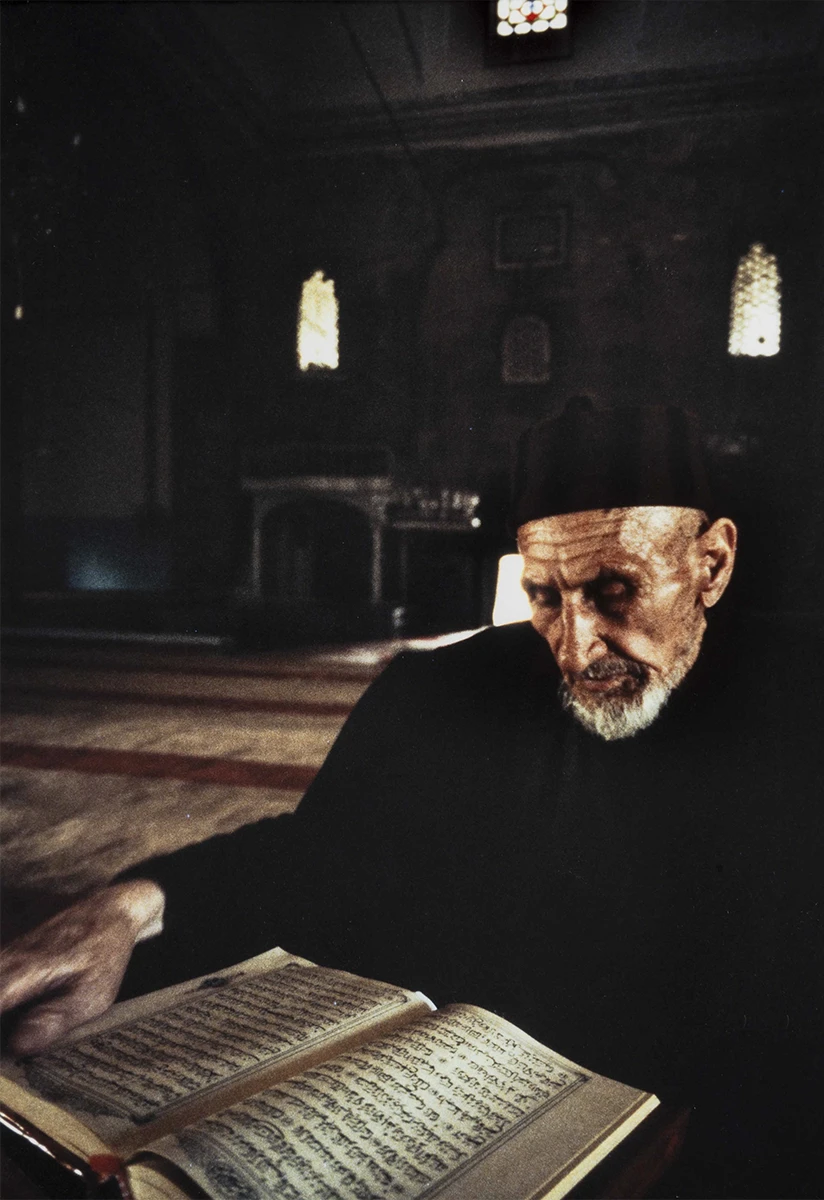
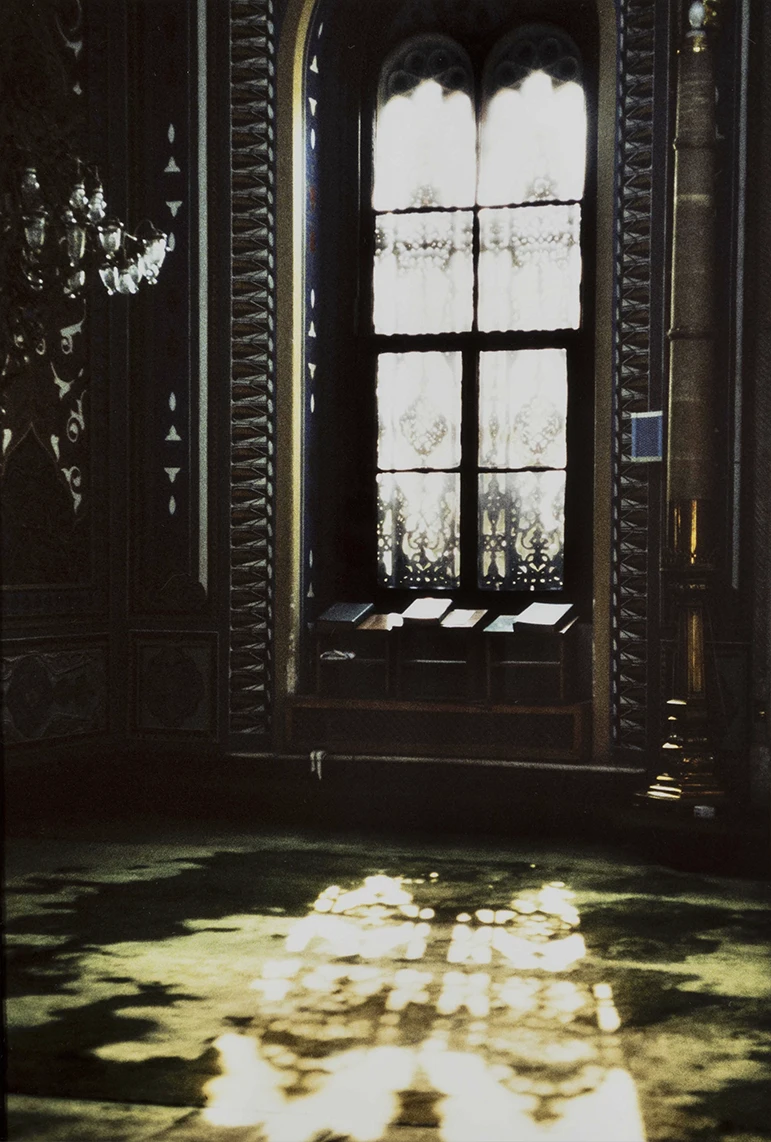
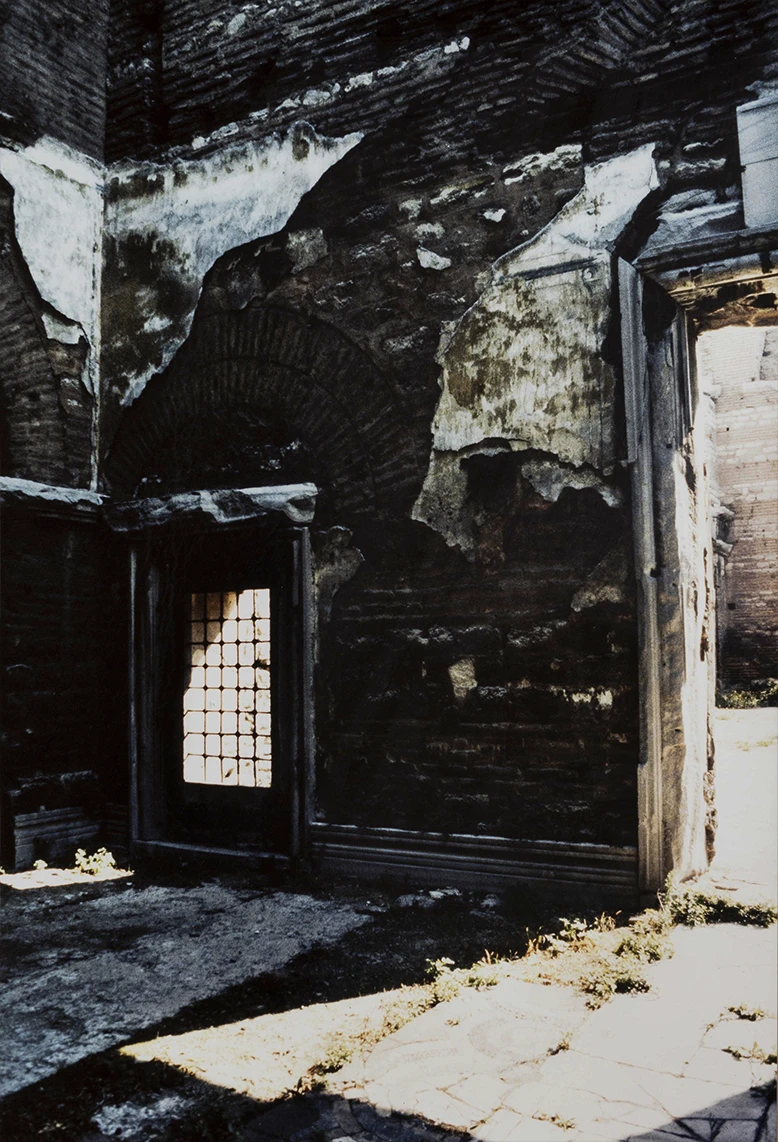
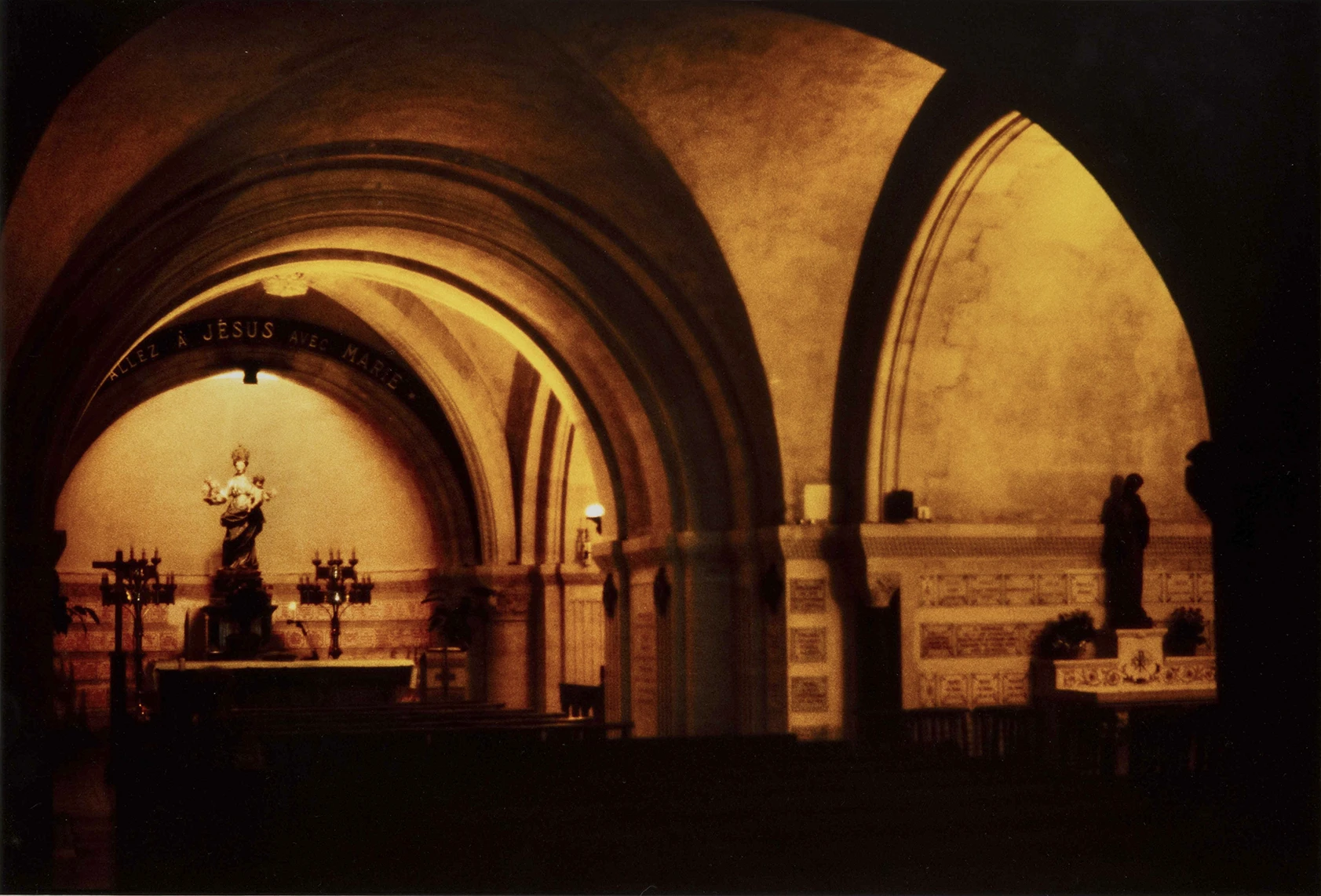
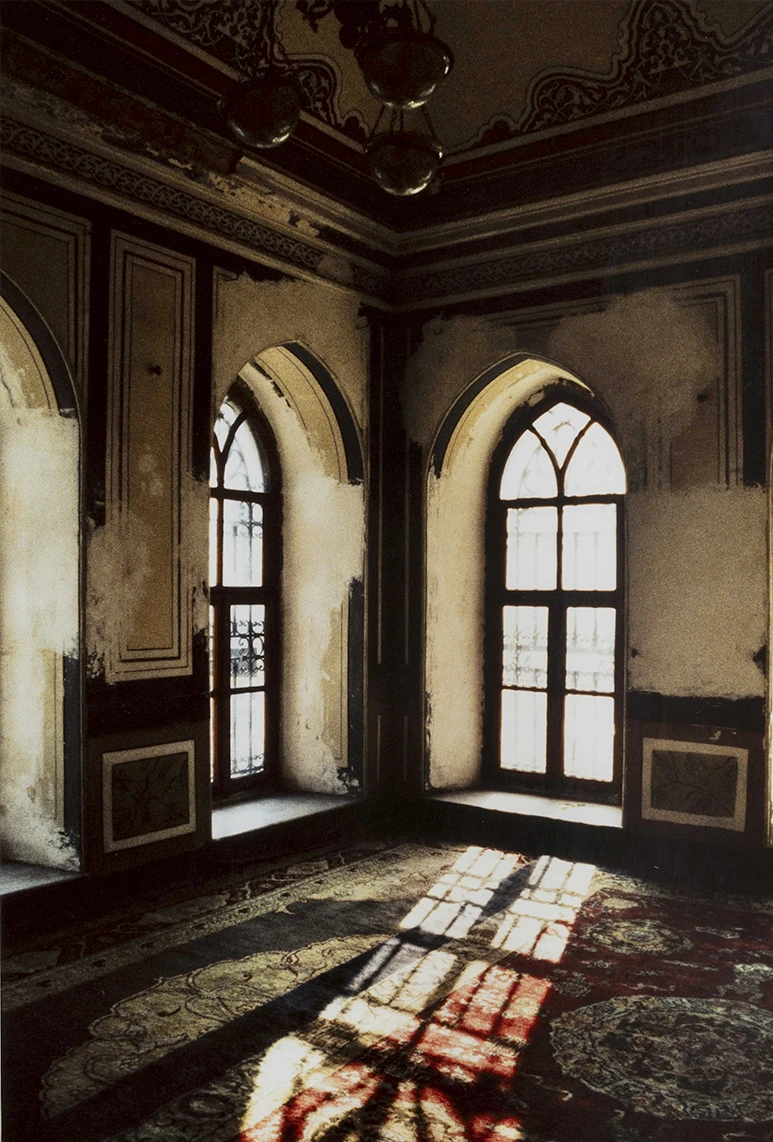
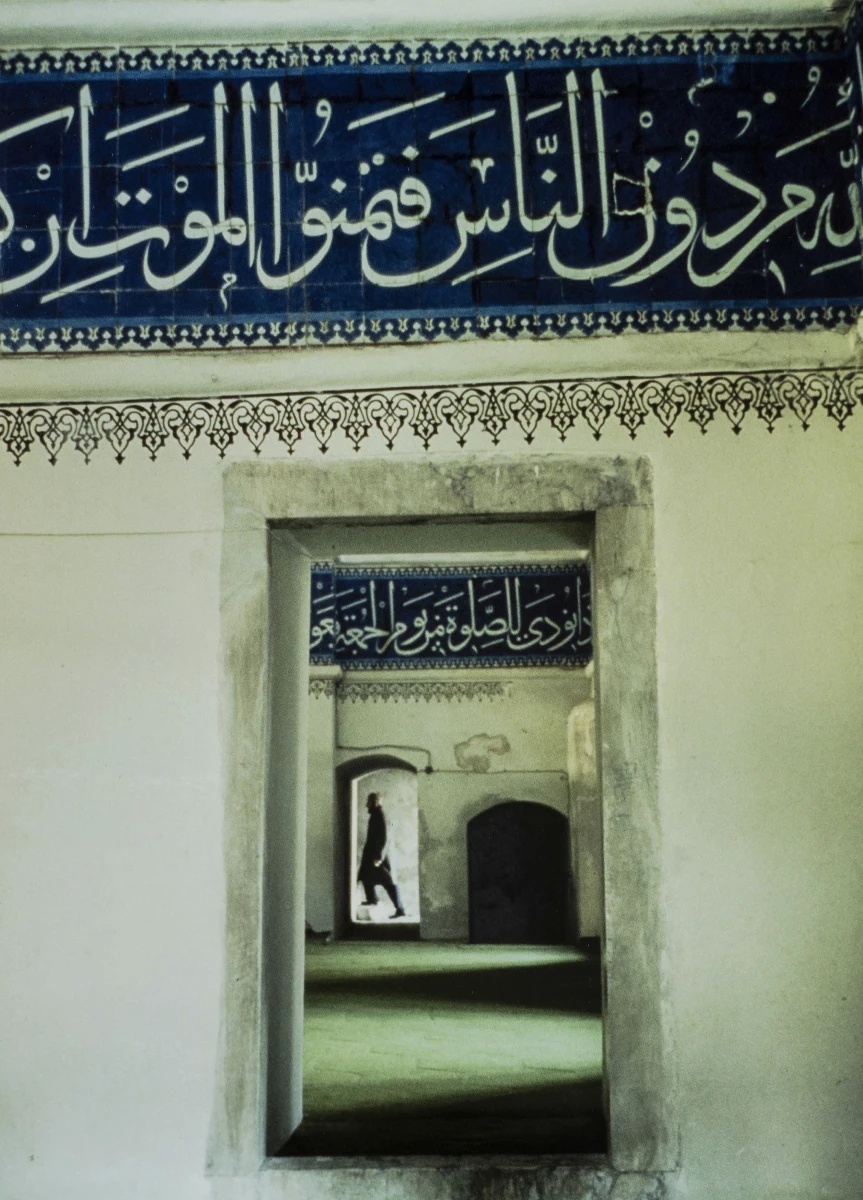
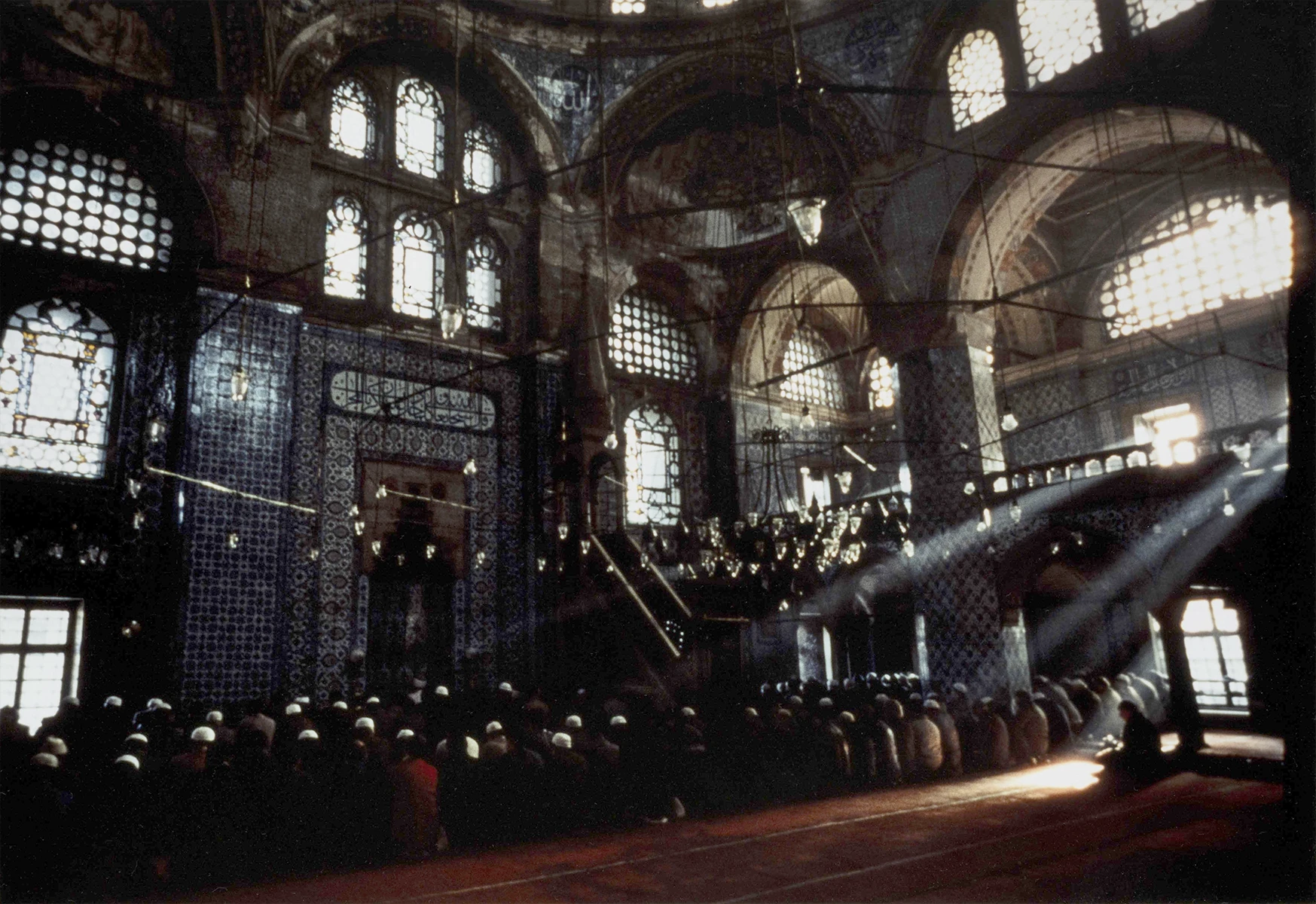
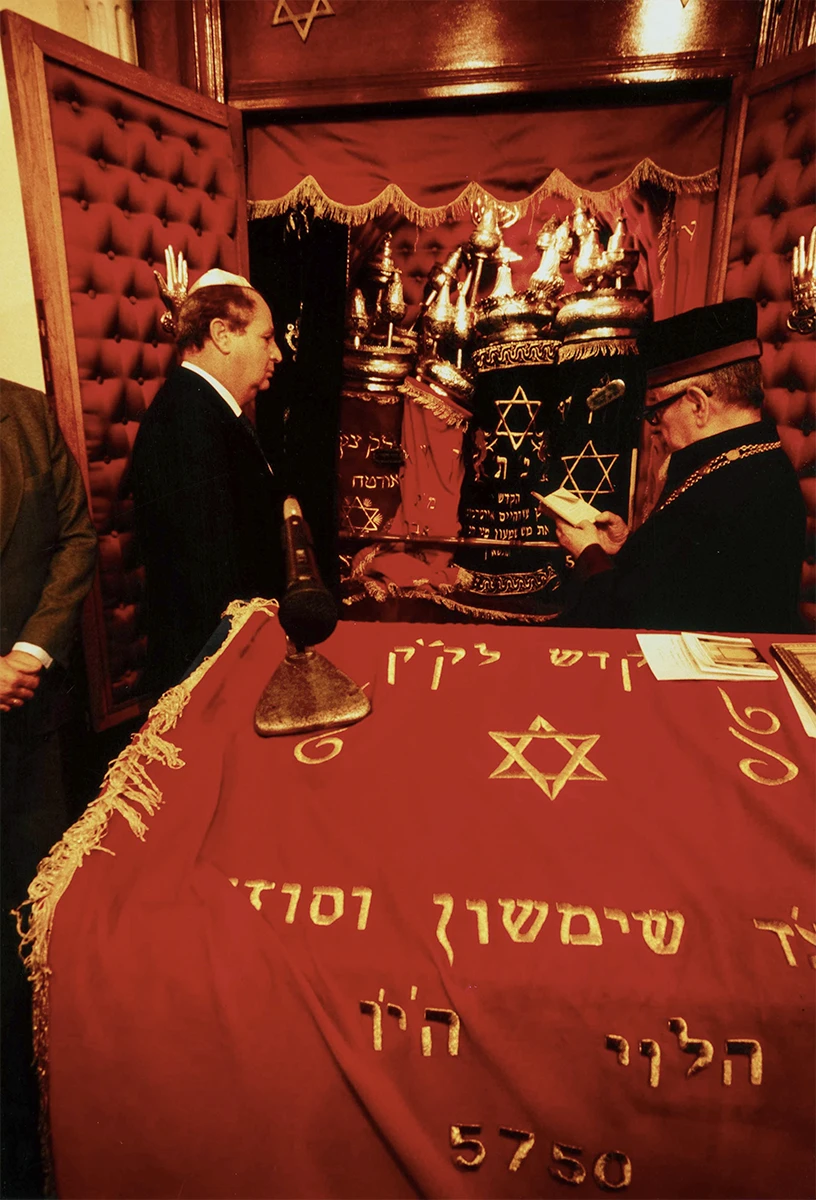
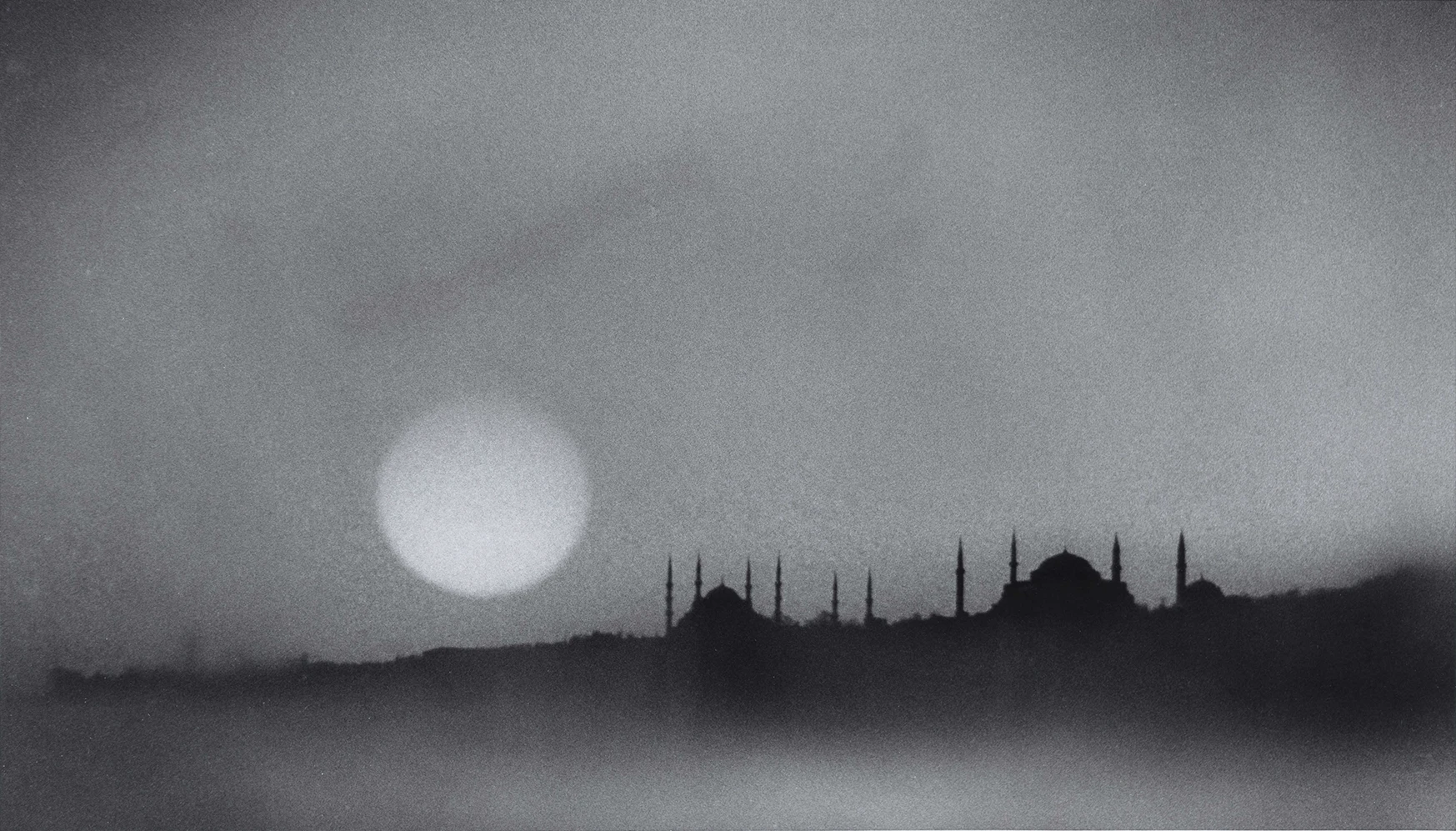
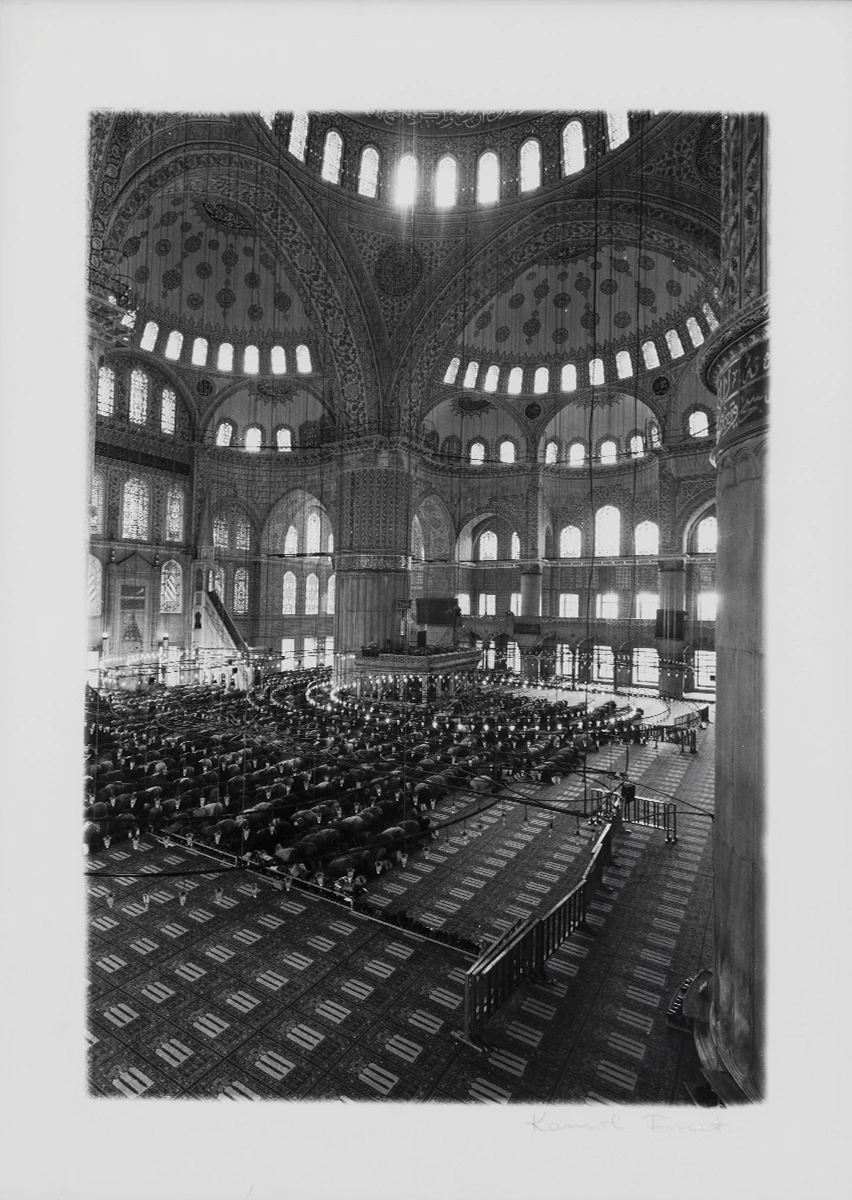
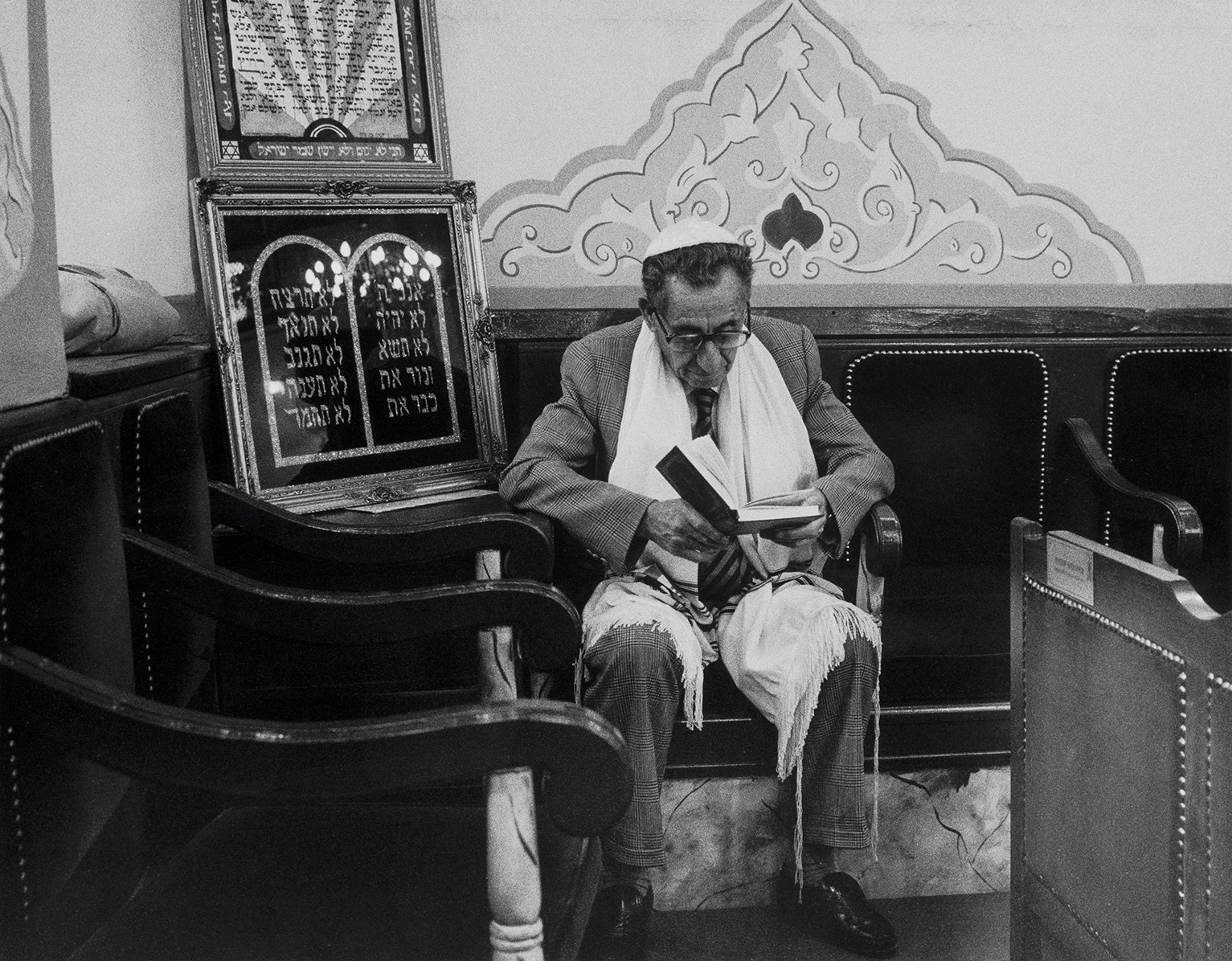
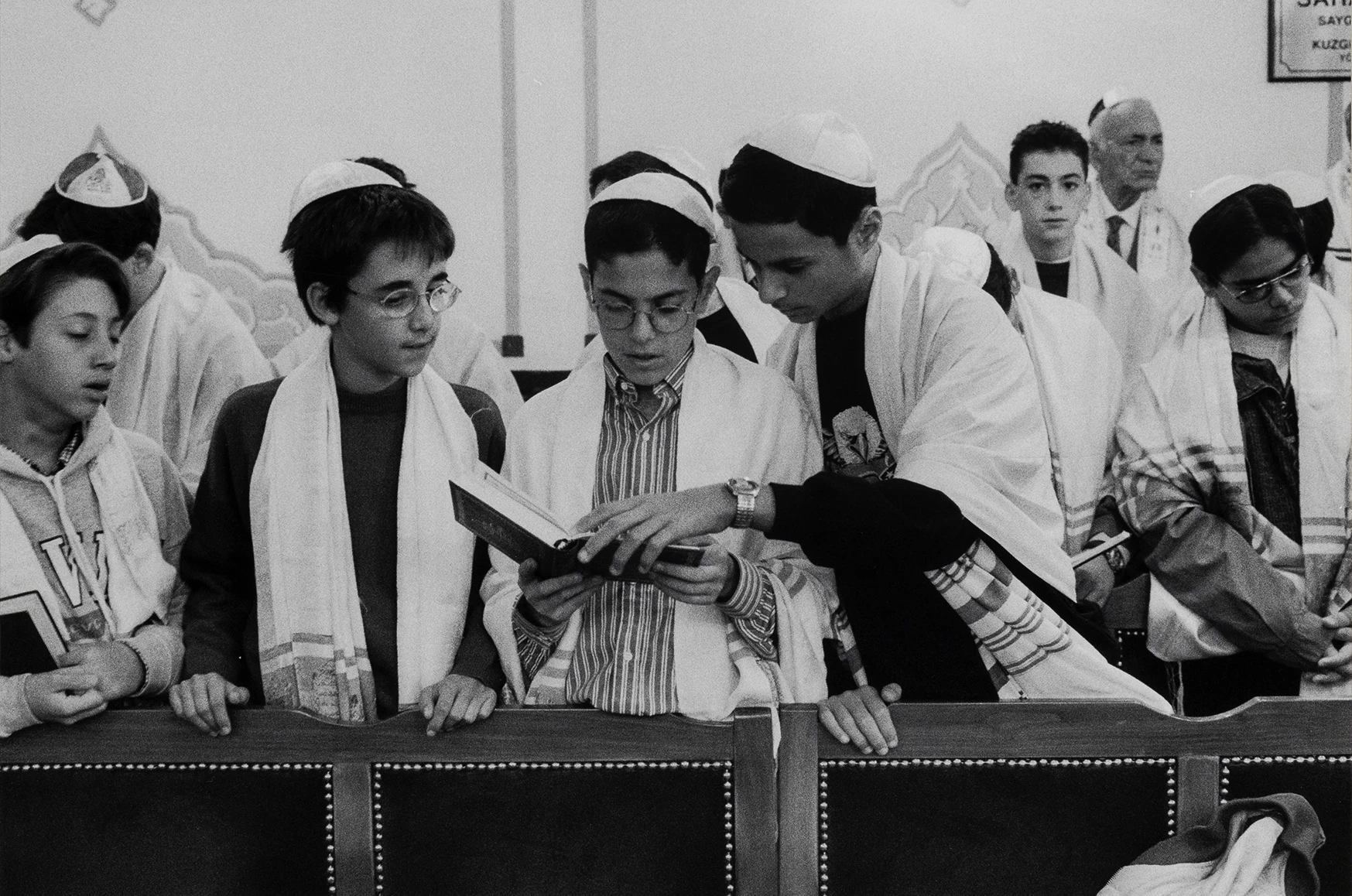
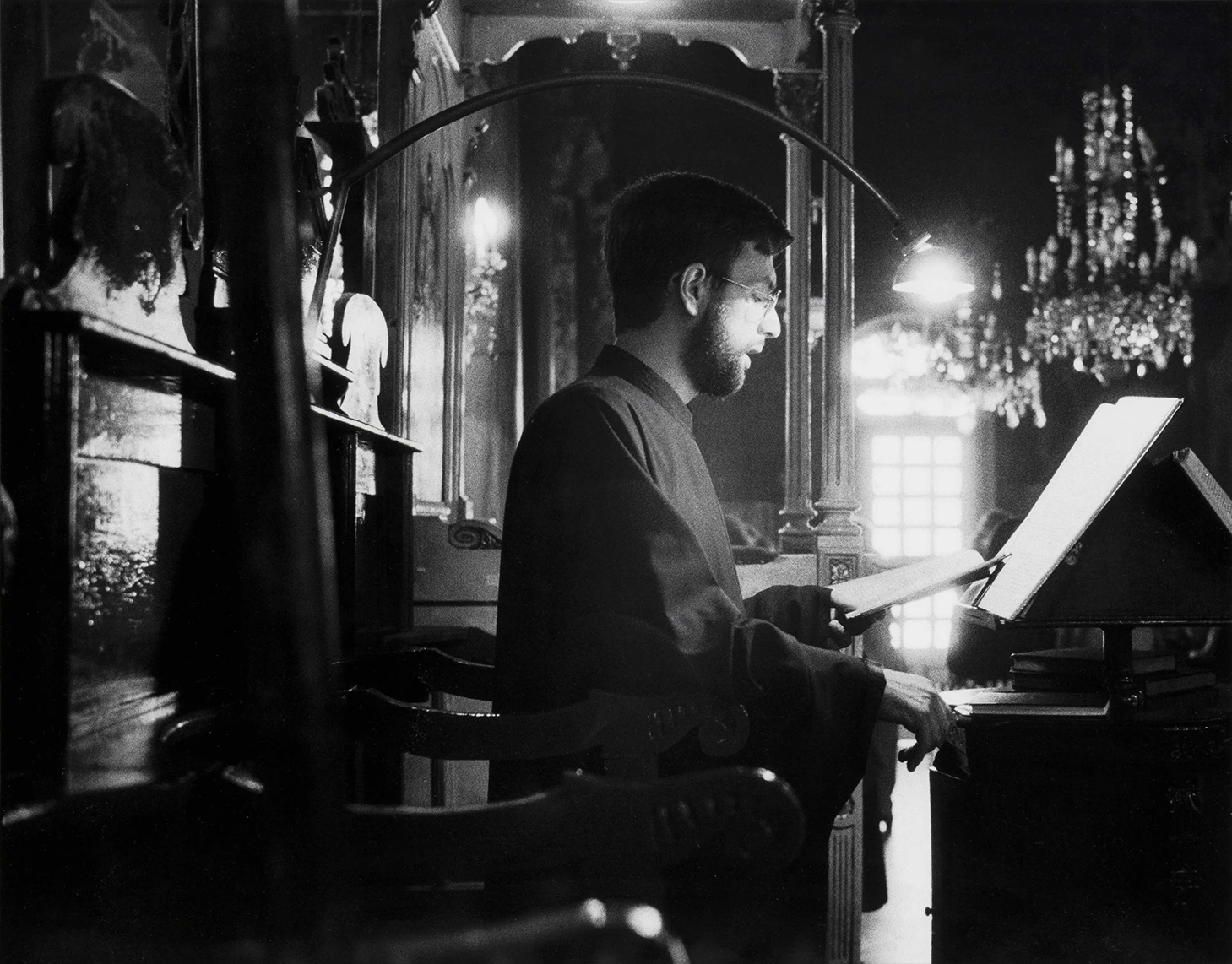
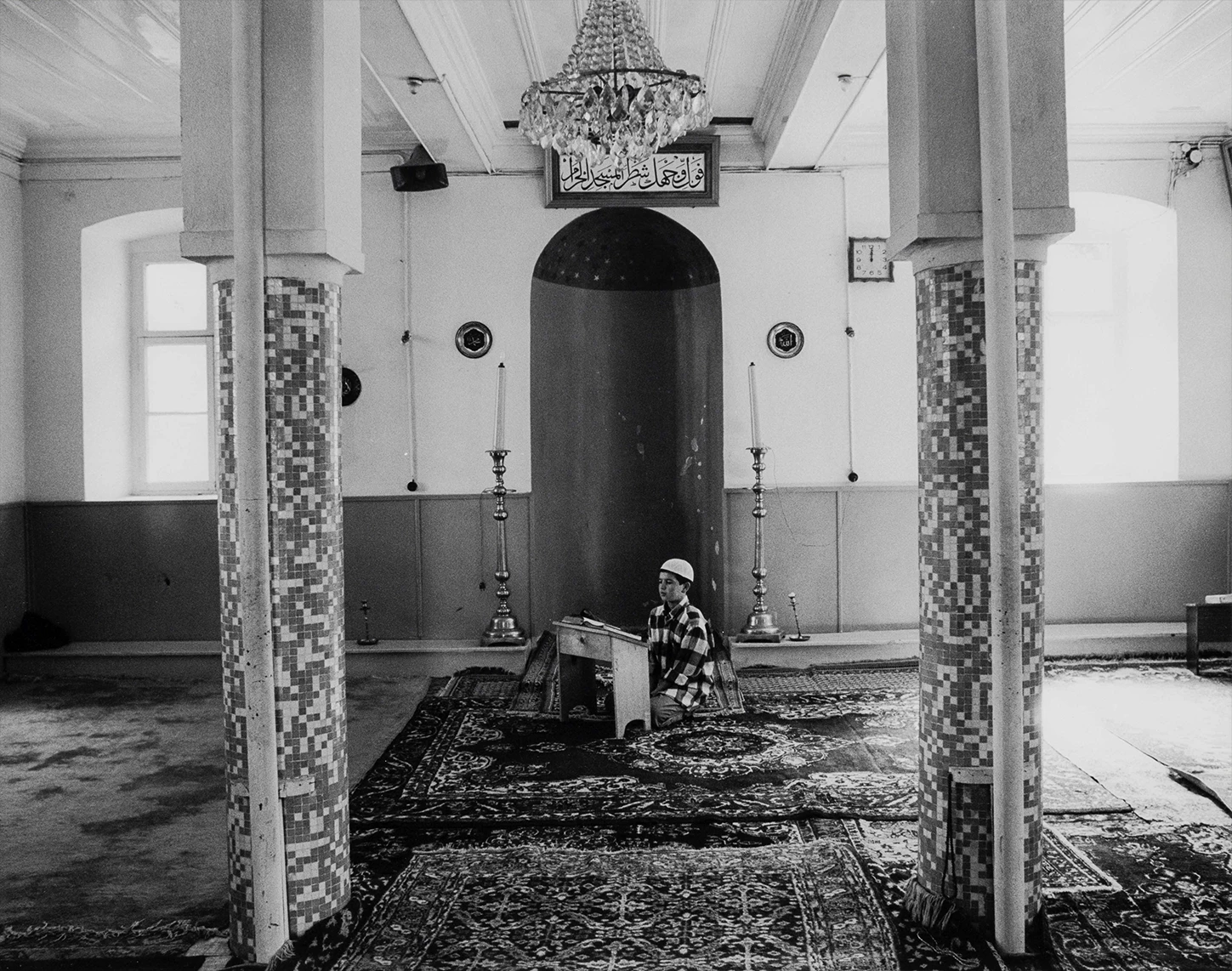
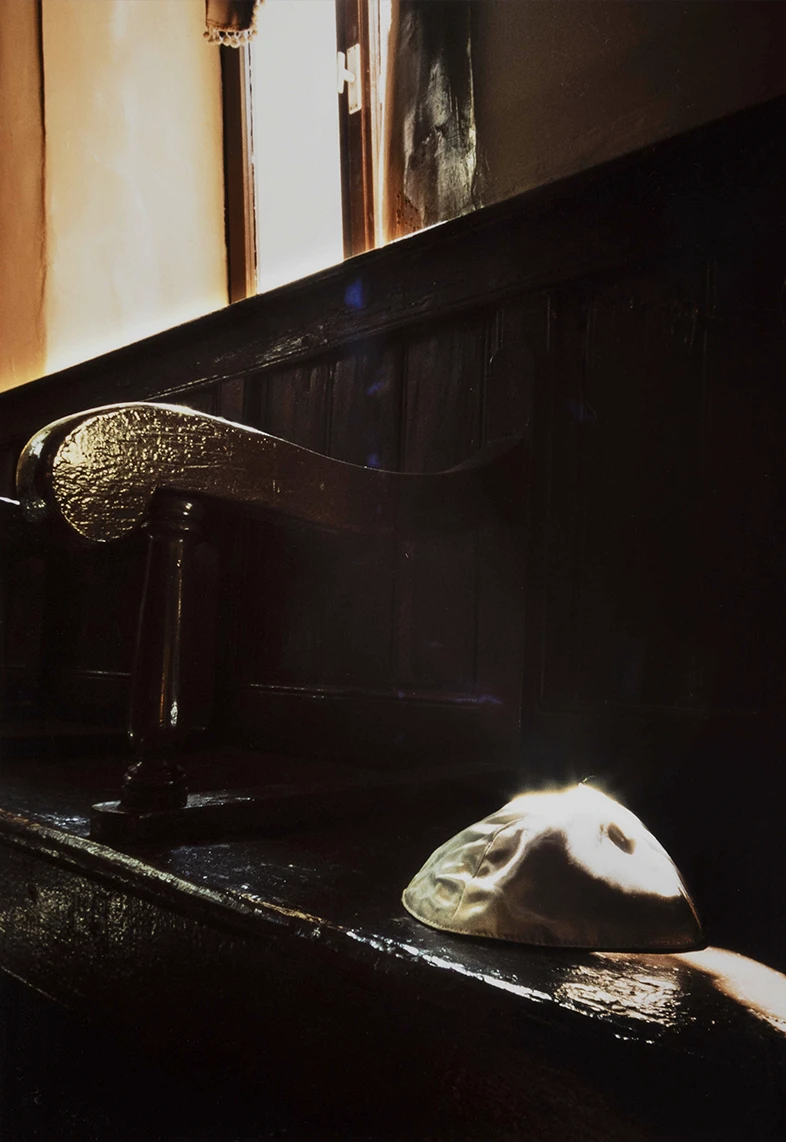
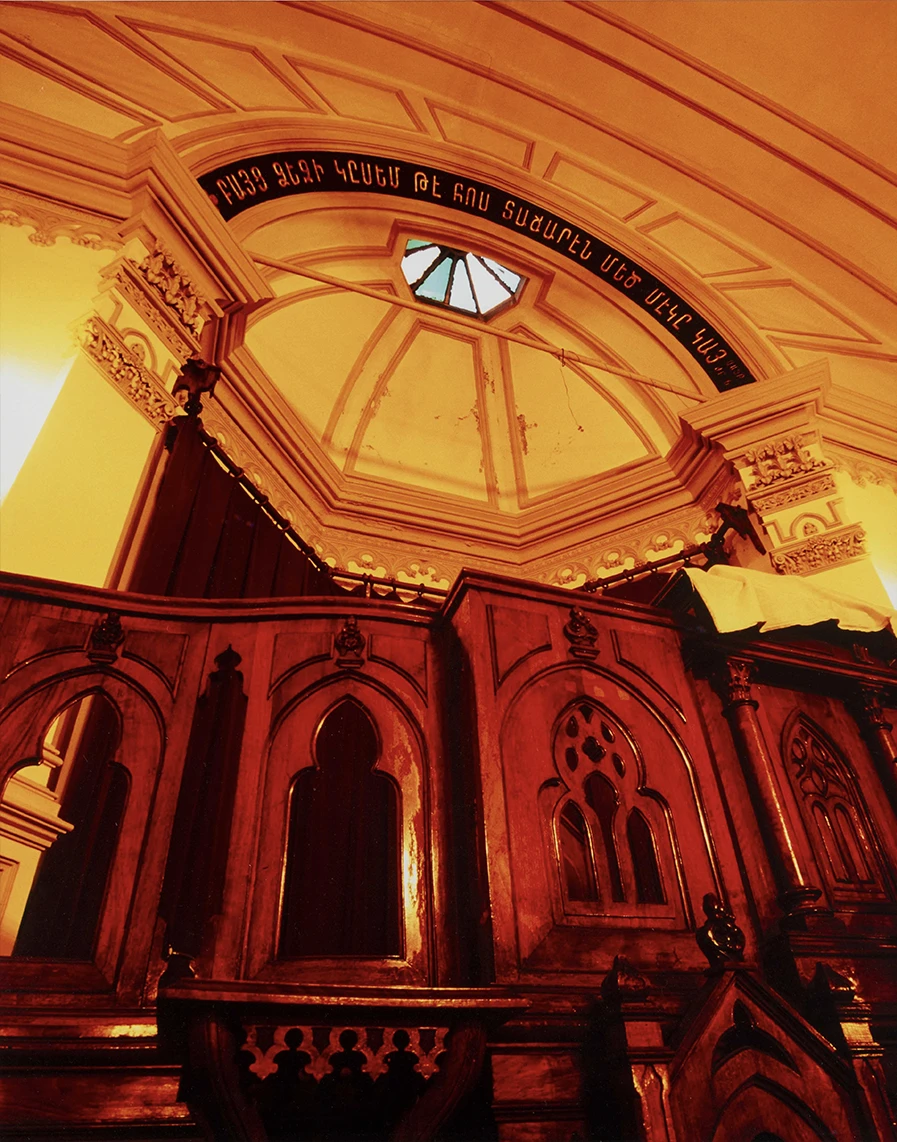
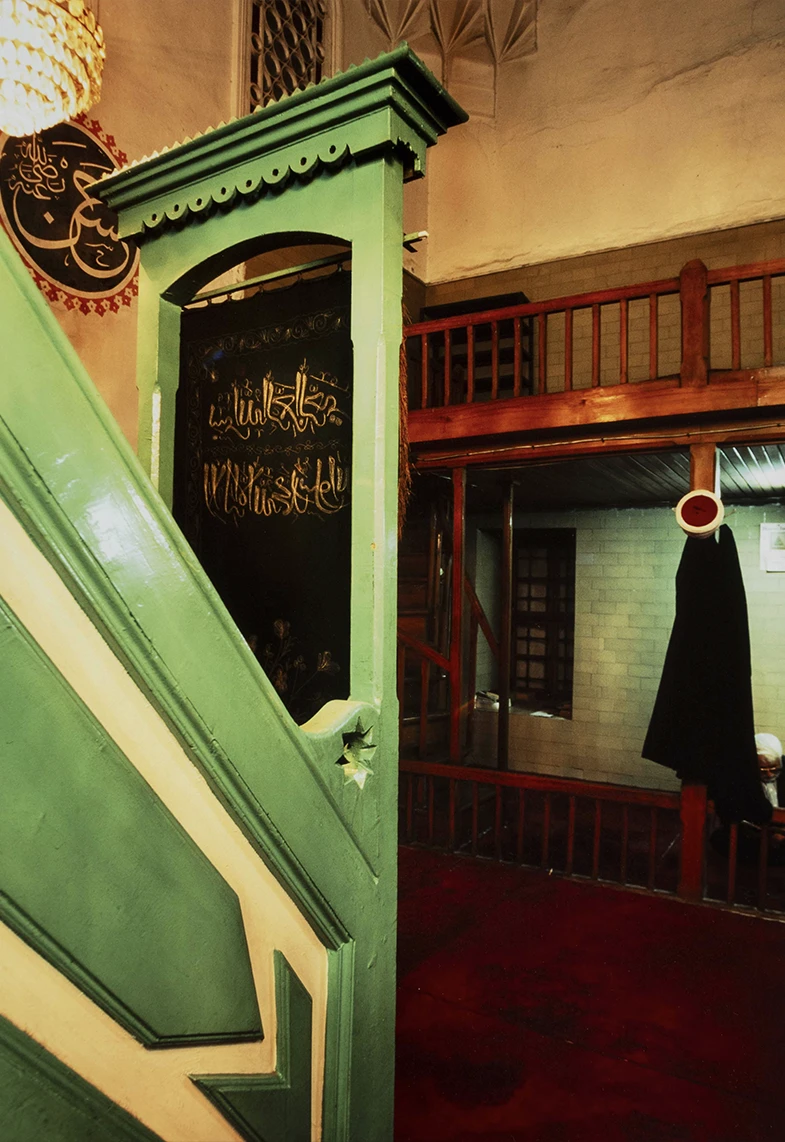
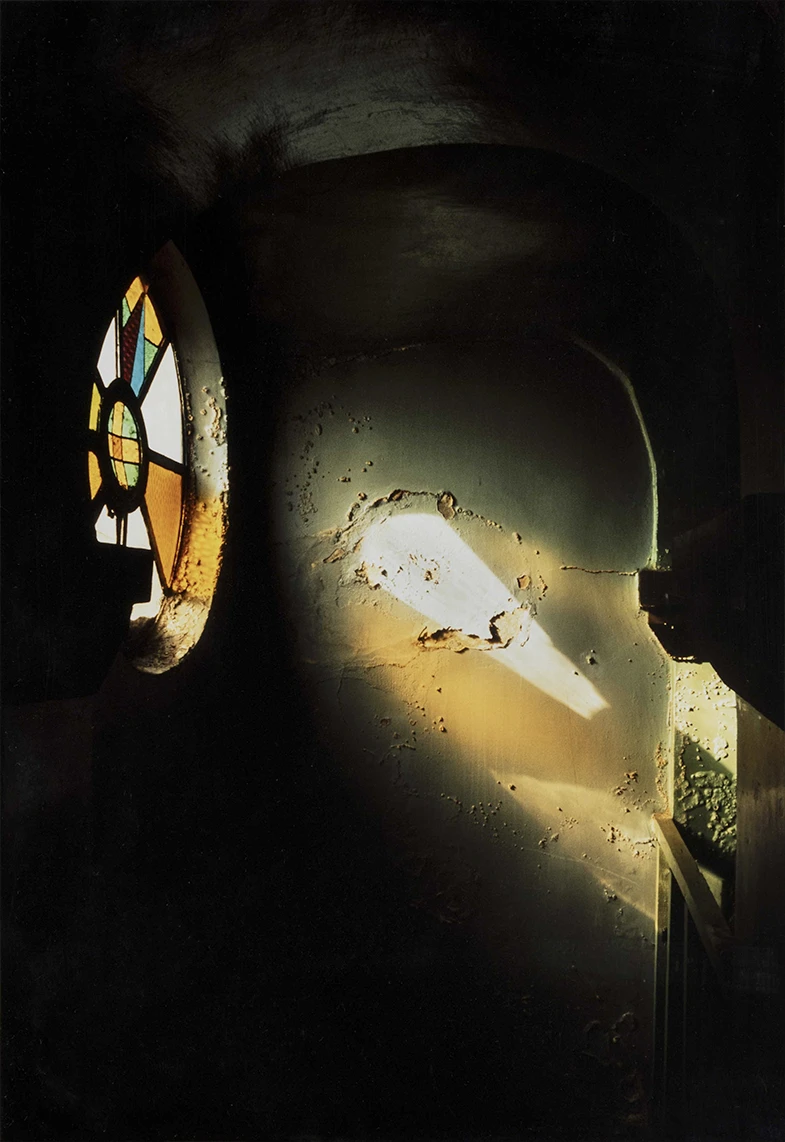
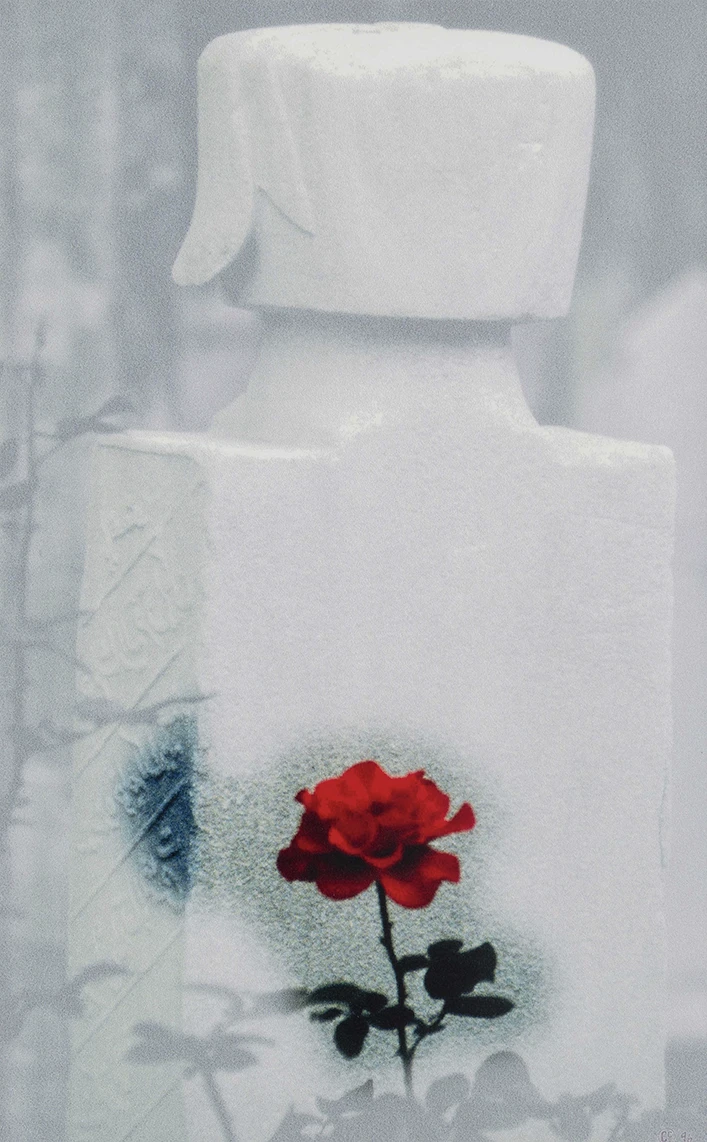
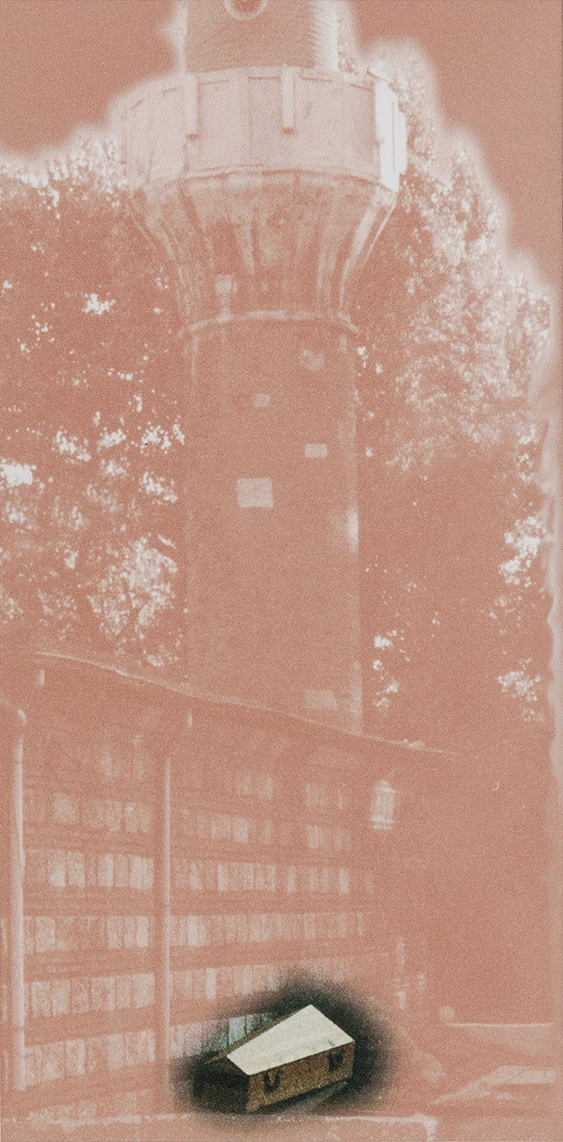
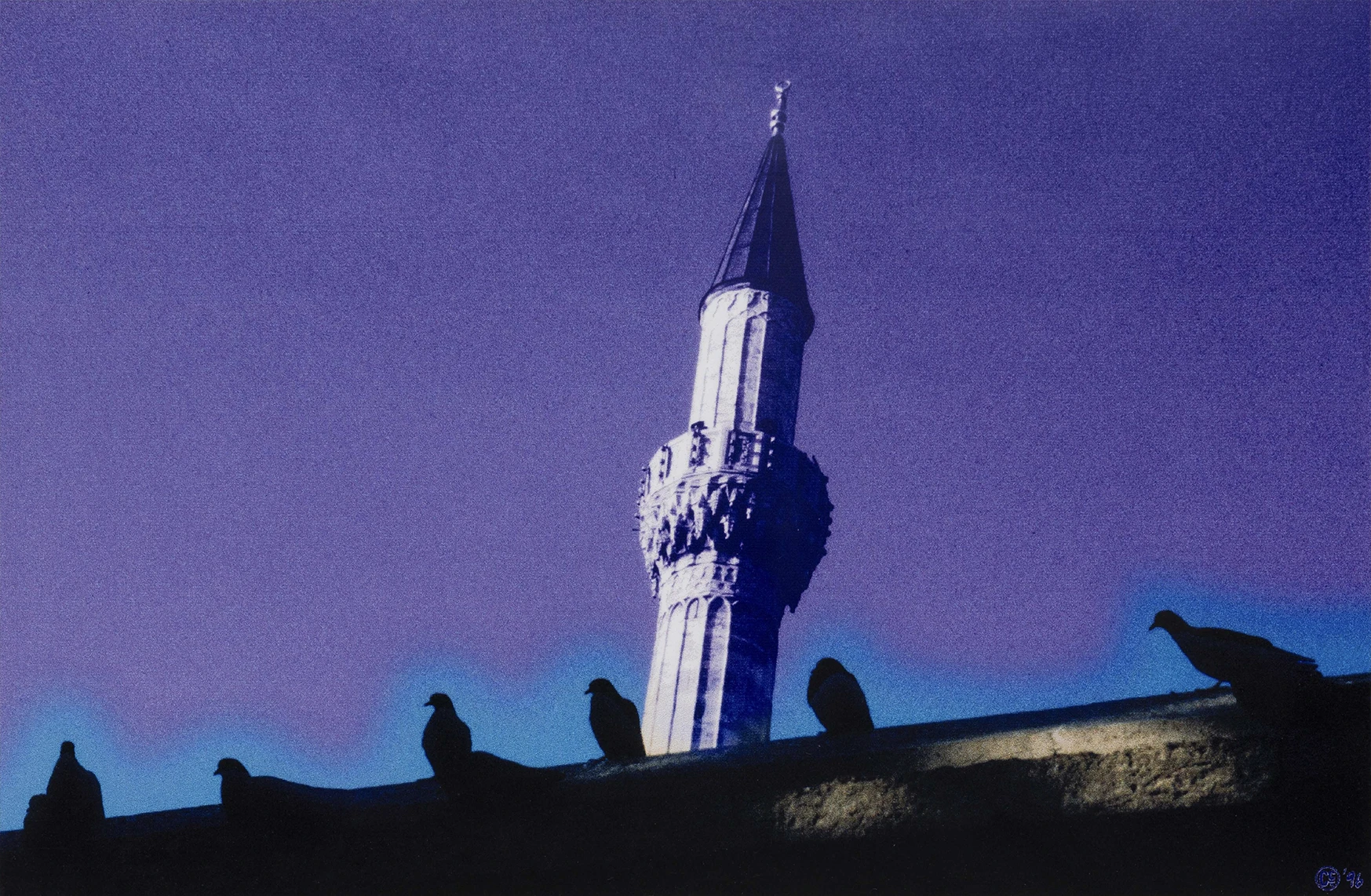
The exhibition of sacred places, composed of photographs by Ara Güler, Kamil Fırat, Manuel Çıtak, Orhan Cem Çetin, Murat Germen, and Ani Çelik Arevyan, has opened at the Teşvikiye Milli Reasürans Art Gallery. The exhibition will remain on view until December 28.
This exhibition addresses the dynamics that nurture Istanbul’s multicultural character and that will also influence its future climate of belief. The works presented in the exhibition offer a perspective shaped by a project that focuses on Istanbul’s sacred spaces in line with this aim.
The project, which is accompanied by the publication of a book, is advised by Prof. Dr. Afife Batur, who contributed to the “Istanbul: World City” project of the History Foundation. Prepared with the support of the Istanbul Kadıköy Rotary Club, coordinated by Amélie Edgü, director of the Milli Reasürans Art Gallery, and managed by Murat Ural, the project is also supported by the German Cultural Center.
In a statement made by the project management regarding the purpose of the exhibition, the following remarks are included: “Istanbul and Jerusalem differ from other historically and religiously significant cities in that the troubled and divergent paths of the three major monotheistic religions coexist within them. This situation is the result of Istanbul’s three-thousand-year history and its geography, positioned at the boundary of two continents or at the point where two different worlds meet. Throughout its history, Istanbul has been a city where people from various regions, tribes, and nations have gathered. Particularly during the Byzantine and Ottoman periods, when empires whose dominions spanned three continents made the city their capital, Istanbul developed as a kind of microcosm reflecting the territories over which these empires ruled.”
The city was first shaped by pagan influences, later by Christian and Muslim ones. The historical names of the city reflect these periods as well: Byzantion symbolizes paganism, Constantinople Christianity, and Istanbul Islam. Yet in every era, other beliefs maintained their presence, sometimes resulting in conflict, sometimes in reconciliation. Undoubtedly, the dominant culture often prevailed over others, but it also brought change along with it.
In fact, Istanbul and Jerusalem serve as examples of the meeting of religions. Muslims who advanced from Africa to the Iberian Peninsula established the state of al-Andalus, while Christians, accompanied by Jews, settled in the same region by following similar routes. However, this “encounter” came to an end when the Catholic Kingdom of Spain expelled Arabs and Jews from the peninsula.
The statement also notes that when the Jews expelled from Spain in 1492 were accepted by the Ottoman Empire, the existing Jewish life in the city was enriched, thereby turning the city into a center where the three major monotheistic religions gathered together.